10 Signs You Need a Workout App to Actually Hit Your Fitness Goals
 By Amnon V. ·
TL;DR
- Not sure you need one? If you train without a plan or keep stalling, you probably do.
- The 10 signs run from missed sessions and no progression to winging it at the gym.
- Structure works because progressive overload, calibrated volume, and reps in reserve are backed by research.
- An app won't lift for you or fix your diet, and some things still need a professional.
- Picking one comes down to matching it to your life, then starting a free plan and adjusting.
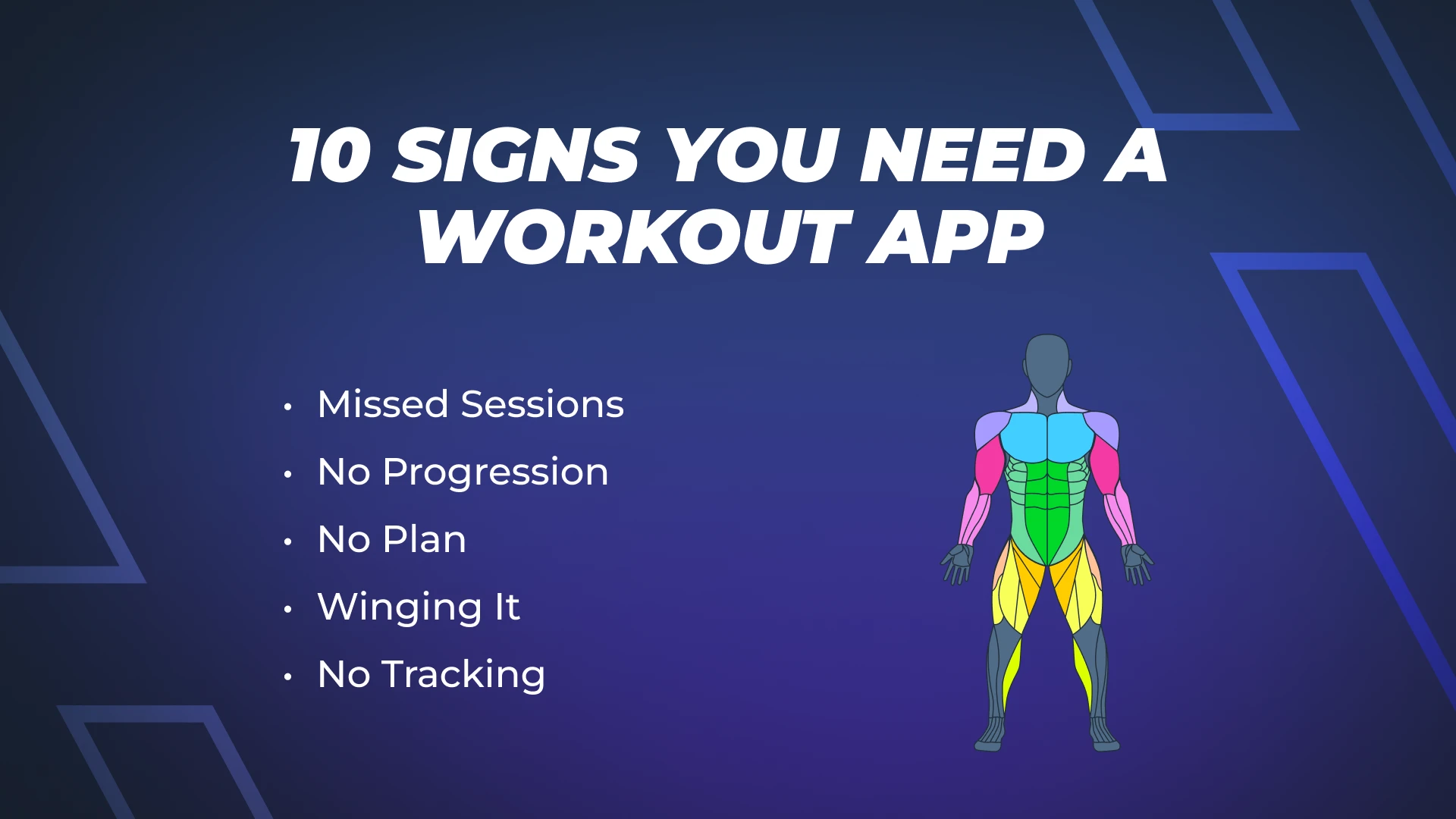
You train hard, but the results don’t match the effort. The weights don’t move. You skip one session, then two, and the plan quietly falls apart. Here’s the part most people miss. The problem usually isn’t effort. It’s structure. A workout app fixes the structure so every session has a point. The best workout apps build a plan around your goal and equipment, track what you lift, and adjust when your week goes sideways. Think of it as a workout planner that adapts instead of a paper routine that shames you for falling behind. Below are 10 signs you’d get more from your training with one, and most good apps are free to try.
Do you actually need a workout app?
You likely need a workout app if you train without a written plan, repeat the same weights for weeks, or keep missing sessions with no way to recover them. A good app turns scattered effort into a structured, progressive plan you can open and follow. Most people don’t lack motivation. They lack a system that tells them what to do today and how to progress next week. That’s the gap an app fills.
10 signs your training needs an app
Some of these will sound familiar. One or two is normal. If five or more land, structure is what’s holding you back.
1. You skip sessions the moment life gets busy
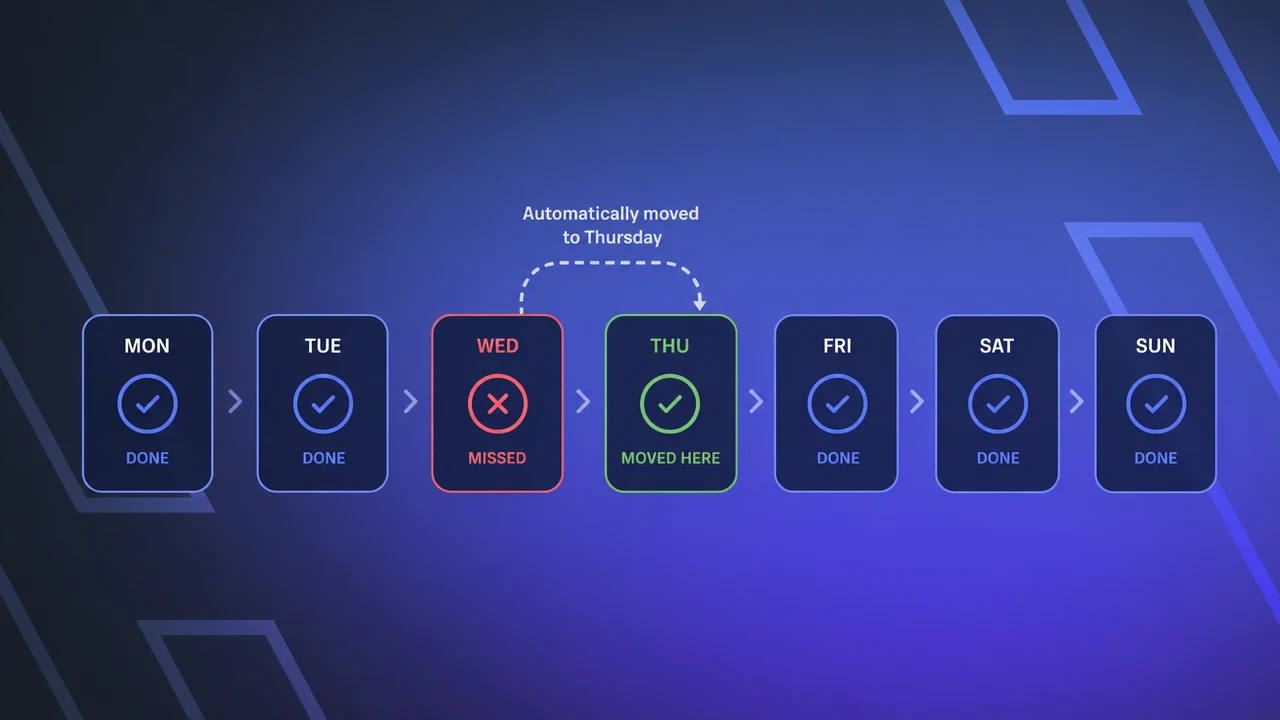
A packed week hits and the gym is the first thing to go. Then guilt makes it harder to restart. A plan that flexes helps here. Gymverse re-sequences your week when you miss a session, so one bad week doesn’t reset your progress.
2. You lift the same weight for the same reps every week
If nothing goes up, nothing changes. Muscle adapts only when you keep asking a little more of it over time, whether that’s a bit more weight or a couple more reps. That’s progressive overload, and it sits at the core of every evidence-based strength plan. An app tracks your lifts and nudges the numbers up at the right pace.
3. You walk in and decide what to do on the spot
Deciding mid-workout burns time and focus, and it usually means defaulting to the same three machines. A workout app hands you an ordered session before you arrive. It tells you which exercises, how many sets and reps, and what weight to start with.
4. You have no idea if your weekly volume is enough
Too little and you stall. Too much and you’re fried. A productive range for growth is roughly 10 to 20 hard sets per muscle each week. Guessing rarely lands there. An app counts the sets for you and spreads them across the week.
5. You hammer the same muscles and skip the rest
Favorite lifts get all the attention while weak points get ignored. That builds imbalances and stalls progress. Training each muscle about twice a week beats cramming it into one session. A structured split covers everything on a sensible rotation.
6. You can’t tell if you’re actually progressing
Without a log, “am I getting stronger” is a shrug. Progress you can see keeps you going. An app stores every set, shows your personal records, and turns the trend into data instead of a feeling.
7. You’re not sure how hard each set should be
So you either grind every set to failure or stop way too early. Neither is ideal. The fix is a simple effort gauge called reps in reserve, where you stop about 1 to 3 reps short of failure. An app prescribes that effort for you and keeps it consistent.
8. You never take a lighter week and you keep stalling
Pushing hard every week with no let-up leads to fatigue, not gains. Your body grows during recovery, not during the grind. Planned lighter weeks, called deloads, are built into good programs. An app schedules them so you don’t have to guess when to back off.
9. Your program doesn’t match your equipment, schedule, or level
A plan built for a full gym is useless in a hotel room. A routine written for an advanced lifter can bury a beginner. An app builds around what you actually have: your gear, your days, and your experience.
10. You’ve bounced between random routines and nothing sticks
Free PDFs, a friend’s split, a random YouTube program, none of it lasts. One plan that adapts as you go beats a folder of routines you abandon. That’s the whole point of a workout planner, and you can start one free.
Effort was never your problem. Structure was.
What structure actually does, backed by research
The reason structure works isn’t hype. It comes down to four principles that show up again and again in exercise science, and a good app applies all of them for you.
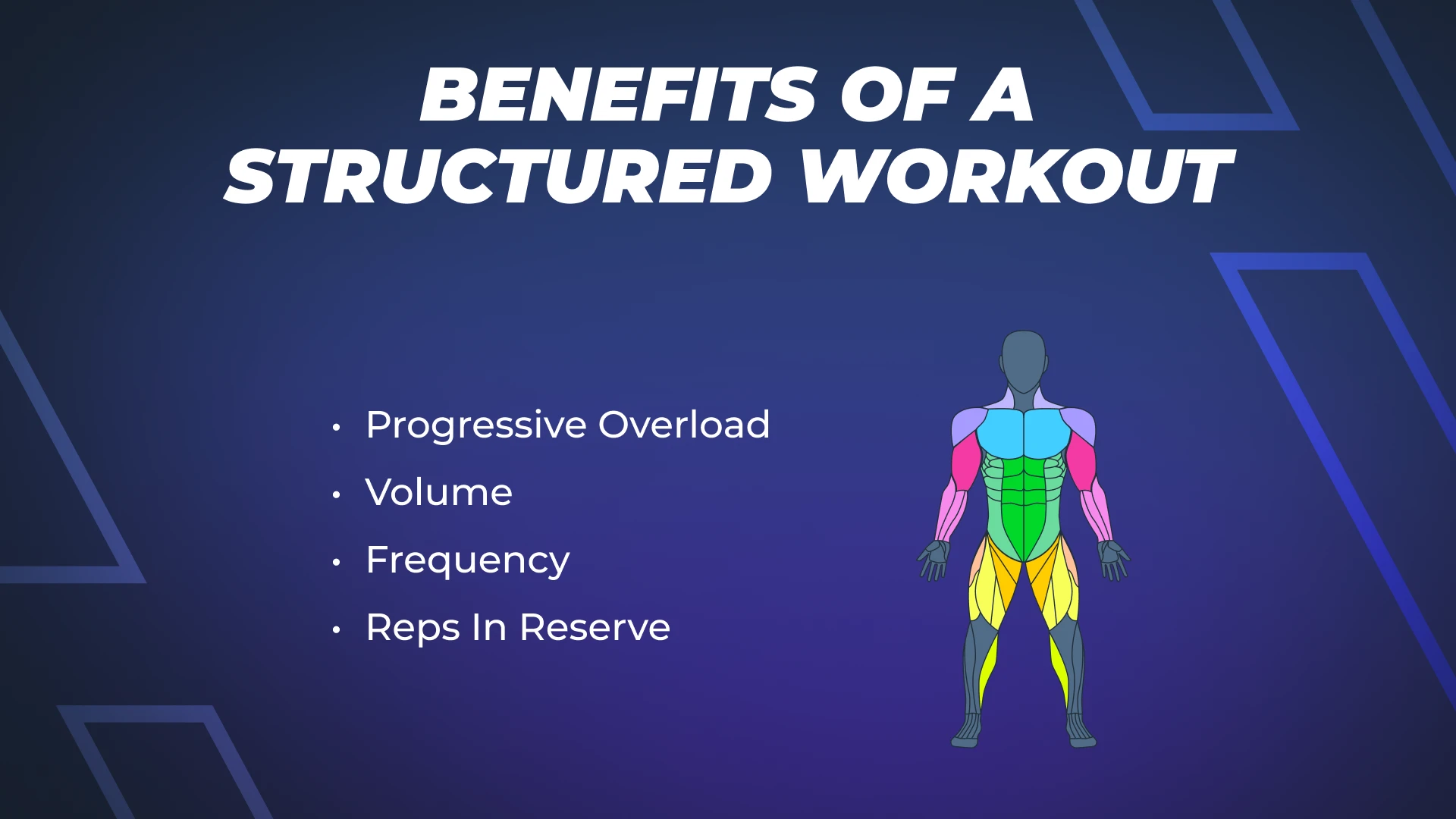
Progressive overload. Muscle changes when you keep adding a little over time, whether that’s load or reps. A study in PeerJ found both approaches grow muscle.
Volume. A review in the Journal of Sports Sciences found more weekly sets produce more muscle, with roughly 10 or more sets per muscle a week as a productive zone.
Frequency. A meta-analysis in Sports Medicine found training a muscle at least twice a week beats once a week, largely because spreading the work out lets you fit in more quality weekly volume.
Effort. The reps-in-reserve scale keeps sets close to failure without going over, and research shows you don’t have to reach failure on every set to get stronger.
Gymverse builds these four into every plan for you. None of this is instant. Results depend on your starting point, effort, and nutrition. They also differ from person to person.
What a workout app won’t fix
An app is a tool, not magic. It structures your training, but it can’t do the work for you, and a few things sit outside what any app should handle. It won’t lift the weights or show up for you, so consistency is still your job. It won’t fix your nutrition on its own. For personal diet or medical decisions, talk to a doctor or a registered dietitian. It can’t coach advanced technique the way a trainer standing next to you can, and it can’t diagnose or rehab an injury. If something hurts, see a professional. Early on, start conservative, then use the swap and edit tools to dial the plan to your level as it learns your lifts.
How to choose a workout app
The best workout app for you is the one you’ll actually keep using. Look for four things. The plan should adapt to your real week and drive genuine progression. It should also give clear form guidance and progress you can see. Get those right and the rest is preference. Strong options exist, and the honest take is that no single app fits everyone. Apps like Fitbod and Hevy each do things well. Where Gymverse stands out is that plans are built by real trainers and grounded in the exercise science above, not just an algorithm. You get 500+ professional exercise videos with form guidance, AI load management that adjusts weights as you improve, and a plan that re-sequences when life gets busy. It’s free for 7 days with every feature unlocked, so you can test it against your own training before you pay. Build your free plan and see whether the structure changes your results. It’s on iOS and Android.
Frequently asked questions
Do I need a workout app?
You need a workout app if you train without a clear plan, keep repeating the same weights, or lose momentum whenever your schedule changes. It replaces guesswork with a structured, progressive plan and tracks your lifts so you can see progress. If you already have a coach or a plan that's working and you're still progressing, you may not need one.
What are the signs your training needs structure?
The clearest signs are missed sessions you can't recover, no week-to-week progression, and no plan or tracking when you arrive. When several of those sound like you, structure is the missing piece, and that's what an app provides.
How do I know if I need a fitness app?
You know you need a fitness app when your effort isn't turning into results and you can't say why. Common tells are stalled lifts, random workouts, and no record of what you did last week. An app makes the plan and the progress visible.
When should I start using a workout app?
Start now if any of the 10 signs above apply, whatever your level. Beginners get a safe, structured starting point, and experienced lifters get automatic progression and volume management. Most apps, including Gymverse, are free to try, so there's little reason to wait.
Sources & further reading
- Progressive overload (adding load or reps over time) builds muscle: Plotkin et al. (2022), PeerJ
- More weekly sets produce more muscle, with about 10 or more sets per muscle a week as a productive zone: Schoenfeld, Ogborn, and Krieger (2017), Journal of Sports Sciences
- Training a muscle at least twice a week beats once a week for growth: Schoenfeld, Ogborn, and Krieger (2016), Sports Medicine
- Reps in reserve is a validated way to gauge effort and keep sets near failure: Helms and colleagues (2016), Strength and Conditioning Journal
- You don't have to train to failure on every set to build strength: Robinson et al. (2024), Sports Medicine
All Gymverse articles are reviewed against current research. See our full References & Research page.
Turn what you just learned into a training plan that works for you. Personalized structure. AI coaching. Real progress.
START TRAINING →