What Is a Calorie Deficit? A Clear, Complete Explanation
What is a calorie deficit and how does it cause fat loss? Learn what a calorie deficit is, how to calculate yours, and how to create one without losing muscle or energy.
 By Amnon V. ·
TL;DR
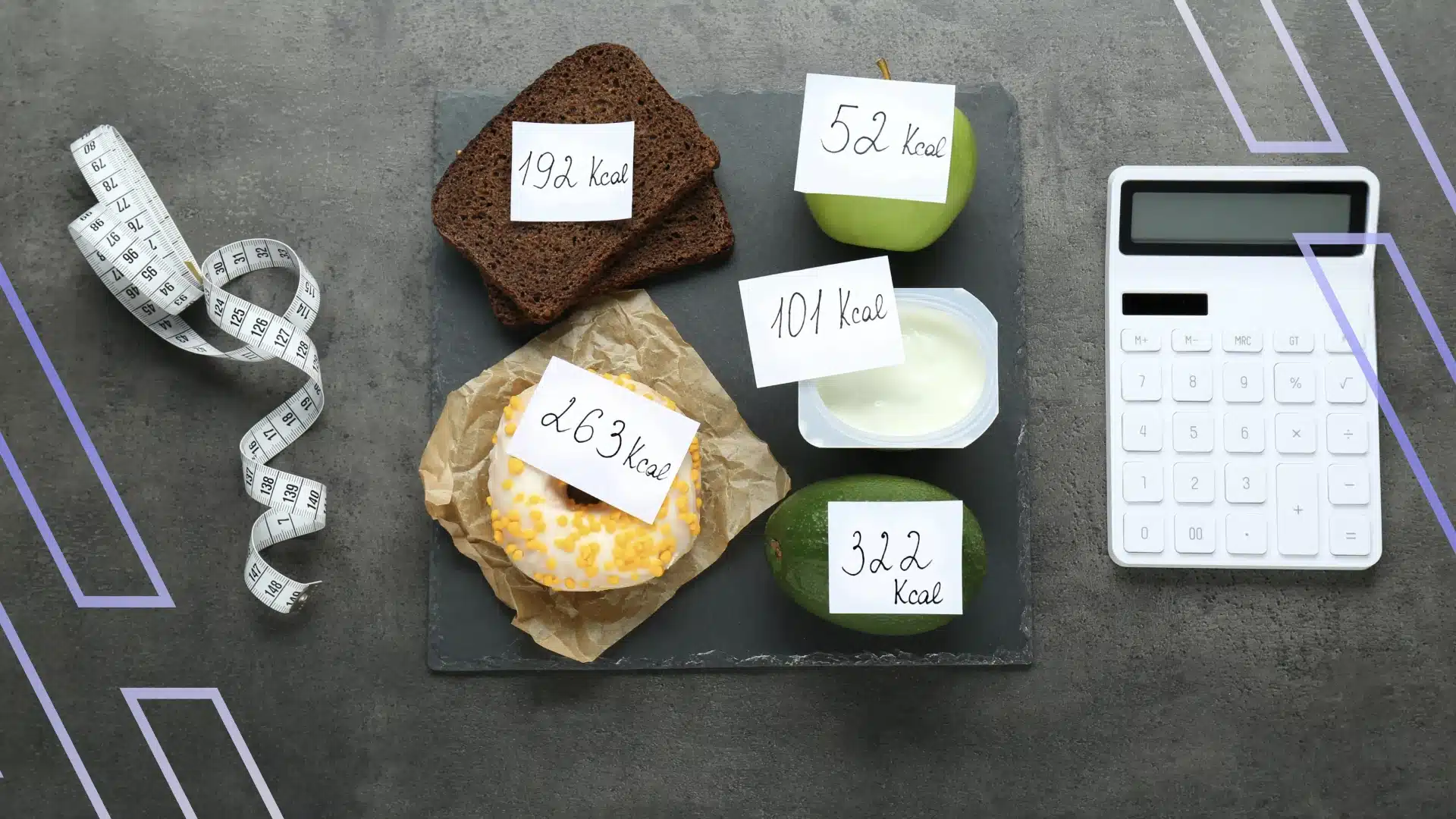
What a Calorie Deficit Means
There is exactly one mechanism for fat loss. Every diet that has ever worked (keto, fasting, paleo, counting points) worked because it tripped this one switch, usually without telling you. Strip away the branding and they’re all just different ways of getting you to eat less than you burn. That gap is a calorie deficit, and it’s the whole game.
When you’re in one, your body turns to stored energy (primarily body fat) to make up the difference. Over time, that produces fat loss. No specific food, diet plan, or training program produces fat loss unless it results in a deficit. Keto, intermittent fasting, cutting carbs: those are delivery methods, ways of making the deficit easier to hit. None beats the others if the deficit is the same. Pick the one you can actually live with; that’s the only thing that separates them.
How Large Should the Deficit Be?
Think of the deficit like driving speed. Too slow and you never arrive: progress so faint you quit. Too fast and you crash: muscle loss, fatigue, a diet you abandon by week three. There is a cruising speed that actually gets you there, and it is set by your body size rather than by a fixed number of calories.
Aim to lose about 0.5–1% of your body weight per week. For an 80kg person that is 0.4–0.8kg a week, which usually means eating somewhere between 300 and 600 calories below maintenance. Scaling it to your own size matters: 500 calories is a gentle trim for a 110kg man and a fairly hard cut for a 60kg woman. Expect the rate to slow as you go, too, because you burn a little less as you get lighter. (Early on, some of that weekly change is water and glycogen rather than fat.)
Example for an 80kg person:
Estimated maintenance calories: 2,400 kcal/day
Fat loss target: 1,900–2,100 kcal/day
A larger deficit does not necessarily produce better results. There is no single number where a deficit turns harmful: it depends on your size, how lean you already are, and what else you are doing. The risks rise steadily rather than suddenly, and protein and resistance training matter far more than the exact figure. A workable rule: if you are losing more than about 1% of your body weight a week, or your performance in the gym is sliding session after session, the deficit is too big for you right now.
How to Create a Calorie Deficit
There are two levers: eat less, or move more. Most people do best pulling both a little rather than either one hard.
Reducing intake is generally the more reliable method. It is easier to not eat 300 calories than to burn an additional 300 calories through exercise.
Increasing expenditure through exercise helps, but its effect on the deficit is often smaller than expected. A 45-minute run burns roughly 350–500 calories depending on bodyweight and pace, the equivalent of one modest meal.
The most effective approach combines moderate dietary reduction with consistent physical activity. Neither extreme (severe restriction or relying entirely on exercise) works as well long-term.
Common Errors That Undermine the Deficit
Most people who fail to lose weight in a calorie deficit are not actually maintaining the deficit they think they are. The most common causes:
- Underestimating portion sizes, particularly for calorie-dense foods like oils, nuts, and sauces
- Not tracking liquid calories: coffee drinks, juice, and alcohol contribute significantly
- Weekend overeating: a surplus of 500+ kcal on Saturday and Sunday can erase a week of deficit
- Trusting your watch’s calorie number: wearables track heart rate well but calorie burn poorly, and individual estimates are commonly off by a quarter or more in either direction
Frequently asked questions
How do I know my maintenance calories?
A calculator estimates your resting metabolic rate, then multiplies it by an activity factor to estimate what you actually burn in a day. Make sure yours does that second step, because a resting figure is not your maintenance. Use that as a starting estimate, then track your weight for 2 weeks while eating consistently. If weight is stable, that intake is close to your maintenance.
Can I lose fat without counting calories?
Yes, but tracking — even temporarily — significantly improves accuracy. Most people underestimate intake without realizing it.
Will a calorie deficit cause muscle loss?
A moderate deficit with adequate protein (1.6–2.2g/kg) and continued resistance training minimizes muscle loss significantly.
Sources & further reading
- Mifflin & St Jeor et al. (1990), Am J Clin Nutr — resting metabolic rate equation
- Helms, Aragon & Fitschen (2014), J Int Soc Sports Nutr — deficit & muscle retention
- Aragon et al. (2017), J Int Soc Sports Nutr — ISSN diets & body composition
- Garthe et al. (2011), Int J Sport Nutr Exerc Metab — rate of loss & lean mass
- Murphy & Koehler (2022), Scand J Med Sci Sports — energy deficit & lean mass
- Doherty et al. (2024), Sports Med — wearable accuracy
All Gymverse articles are reviewed against current research. See our full References & Research page.
Turn what you just learned into a training plan that works for you. Personalized structure. AI coaching. Real progress.
START TRAINING →