What to Look for in a Workout App in 2026: The 10-Feature Checklist
 By Amnon V. ·
TL;DR
- Judge an app by its features, not its star rating.
- The best apps build the plan around you, then adapt as you get stronger.
- They program real training science: volume, effort, and recovery.
- They bend when life gets busy instead of punishing a missed session.
- They show you how to lift with a deep video library.
- They let you customize the plan and track every rep.
- They are honest about limits and let you try before you pay.
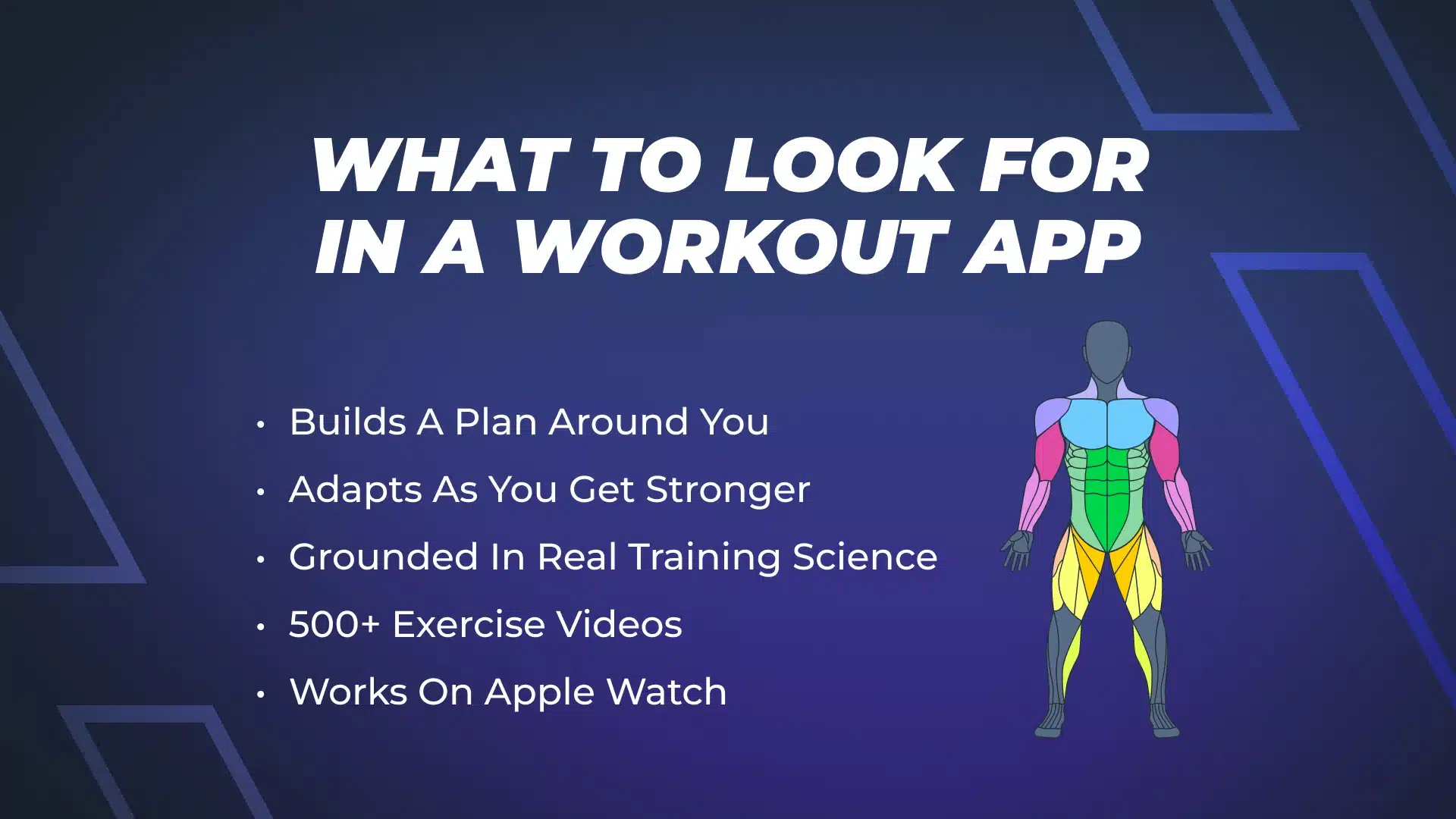
Every workout app in the store makes the same promise. A personal trainer in your pocket. Real results by summer. So how do you choose a workout app that actually delivers, instead of one more subscription you cancel in three weeks? You check the workout app features that matter and ignore the ones that just look good in a screenshot. This is the honest list of what to look for in a workout app in 2026. Ten features worth paying for, what each one does for your training, and where even a good app falls short. We build Gymverse, so we have a side here. We have also worked to keep the list fair.
Why a checklist beats a star rating
Knowing how to choose a workout app comes down to one shift. Judge the programming, not the rating. A five-star average tells you people liked an app. It doesn’t tell you whether it will build muscle for you, on your schedule, with the equipment you own. Ratings reward a clean interface and a smooth signup. They say little about the training underneath. The ten features below decide whether you make progress or just log workouts. Run any app you’re considering through them, Gymverse included.
1. It builds the plan around you
The first question isn’t what the app can do. It’s whether it starts with you. A good app asks your goal, your experience, and what equipment you have, then builds a multi-week plan from your answers. A weak one hands everyone the same template and calls it personalized. Gymverse builds a tailored plan around your goals, schedule, and equipment. It treats a beginner at home and a seasoned lifter in a full gym as two different people. That’s the baseline. Everything else on this list builds on it.
2. It adapts as you get stronger
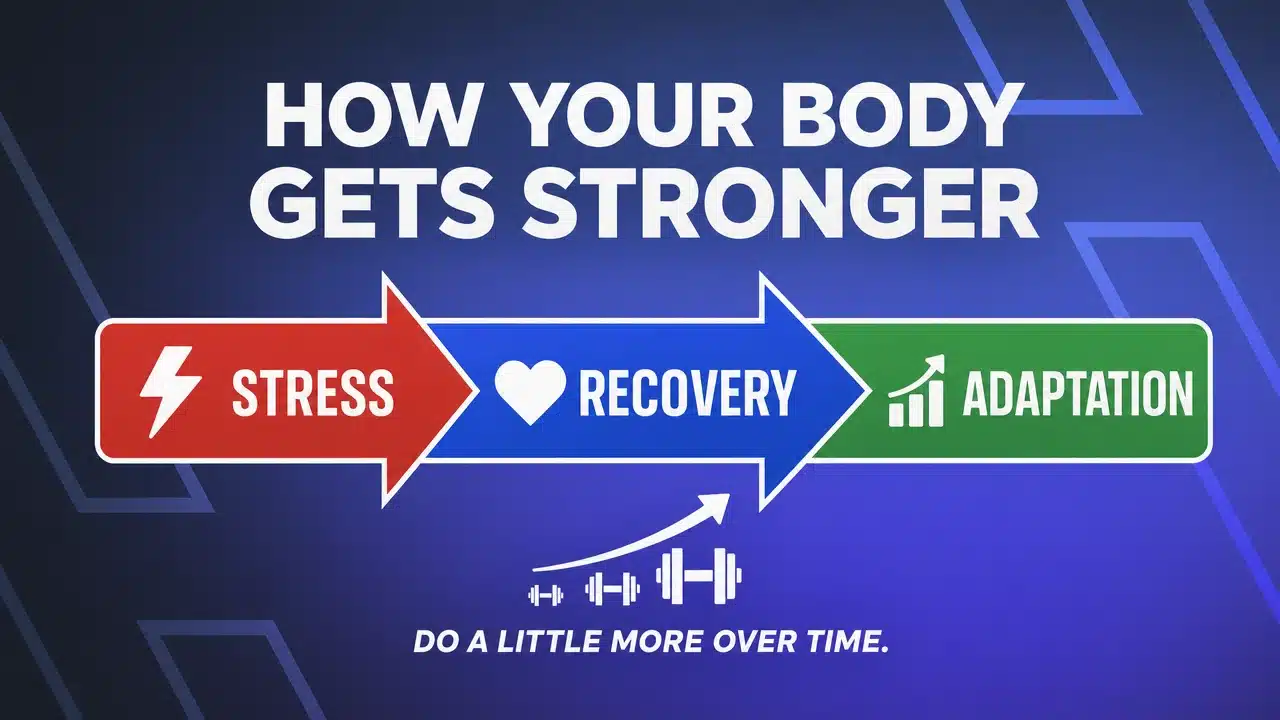
Your body adapts to training, so your training has to keep moving. The feature that matters here is automatic progression. The app should nudge your weights, reps, and sets up as you get stronger, so each session stays challenging. We call this AI-optimized load management. It reads what you lifted last time and suggests the next jump, so you train at the right intensity without doing the math mid-set. This is progressive overload, the principle behind every serious strength program. More quality work over time drives growth. A meta-analysis in the Journal of Sports Sciences found a graded dose-response between weekly training volume and muscle gain, so steady increases beat standing still. An app that never changes your numbers is just a logbook.
3. It’s built on real training science
Plenty of apps can generate a workout. Fewer can tell you why it’s built the way it is. Look for an app whose programming reflects what the research actually says about building muscle. Three principles carry most of the weight. Volume is the number of hard sets you do per muscle each week. Effort is how close those sets come to failure. Recovery is the lighter weeks that let adaptation happen. Gymverse programs each one. It holds most sets within a few reps of failure and schedules deloads so fatigue doesn’t pile up. On effort, the honest version of the science is freeing. A 2023 review in Sports Medicine found only a trivial muscle-growth edge from grinding sets all the way to failure, so stopping a rep or two short still works. You don’t have to suffer on every set to make it count.
4. It bends when life gets busy
This is where most apps quietly fail. They hand you a perfect week and assume you’ll hit every session. Then Wednesday blows up, you miss a day, and the plan has no idea what to do about it. A rigid app punishes you for a missed workout. A good one adjusts. Gymverse re-sequences your week when you fall behind, so you pick up where it makes sense instead of starting the block over. The plan flexes around your life, not the other way around. If an app can’t survive one skipped session, it won’t survive a real schedule.
A rigid app is a spreadsheet with a login. The one worth paying for changes when your week does.
5. It shows you how to lift, not just what to lift
A plan only helps if you can perform the moves. Good form prevents injuries and makes every rep count. Look for a deep exercise library with clear video for each movement, ideally from more than one angle. Gymverse includes 500+ professional exercise videos with step-by-step form guidance, from machine setup to the finish of the rep. You can filter them by muscle group or equipment to swap in something that fits your gym. A big library matters for another reason too. When a movement doesn’t suit your body or your setup, you want a real alternative, not a dead end.
6. It tracks progress and personal records
What gets measured gets managed, and strength training lives on that idea. The app should log every set and surface your personal records, so progression runs on data instead of memory. Gymverse tracks your lifts, flags personal bests, and shows total weight moved over time. It adds leaderboards and shareable achievements if a little competition keeps you honest. The point isn’t the badges. It’s that you can see whether this month beat last month, which is the only real proof your training is working.
7. It lets you customize everything
Personalized shouldn’t mean locked. The best apps let you shape the plan after it’s built. You should be able to swap an exercise for one that hits the same muscle, add moves you love, and drop the ones you can’t do. Gymverse lets you change your split, swap any exercise, and shift your training days. The plan also adapts to the equipment you own, and you can favorite or exclude movements so it learns what you like. One caution. Freedom cuts both ways. Rebuild the whole plan on instinct and you can undo the balance the programming was protecting. Customize, but keep the structure.
8. It fits your time, space, and equipment
The best plan is the one you’ll actually do. So the app has to fit the time you have and the place you train. Look for flexible splits and sessions that scale to your week, from a quick full-body day to a push, pull, legs routine. Once your weekly volume is set, how you split it across days is mostly about recovery and what you’ll stick to, not a magic number. Gymverse builds around the days you can train and the gear you own. That might be a full gym, a few dumbbells at home, or a hotel setup on the road. A plan you can run in the gym but not on a work trip is one you’ll drop the first busy week.
9. It works with your watch
Pulling your phone out between sets gets old. If you wear a smartwatch, logging from your wrist keeps you in the workout. Gymverse supports hands-free training on Apple Watch. You can log your sets, reps, and weights without touching your phone. It’s a small thing that changes how a session feels. Not everyone needs it. If your phone sits on the rack anyway, skip this one. If you’ve ever lost your place in a superset fumbling for your phone, it earns its keep.
10. It’s honest about what it can’t do
The last feature is a tell. Be wary of an app that claims to do everything. The useful ones know their lane and say so. Gymverse is a strength-training app. It programs your lifting with progressive overload, calibrated volume, and built-in recovery. It does that part well. Here’s what it won’t do. It won’t write your diet, though it reads body data from Apple Health to shape your plan. It won’t put a human coach on your form in real time. And it isn’t free forever. You get a 7-day trial with full access, then it’s a paid subscription. If group classes or a running coach are your main goal, a dedicated app will serve you better. Saying that upfront is the honest kind of marketing.
How Gymverse measures up
So how does Gymverse score on its own checklist? Strong where it counts. It builds a real plan around you, adapts the load as you progress, and programs the training the science supports. The 500+ video library and Apple Watch support handle the day-to-day. The honest gaps are nutrition and live coaching. We don’t build your diet or watch your form, and we charge for the app after the free trial. If progressive overload done for you is the goal, that trade is easy. If you want a full nutrition coach in the same app, that isn’t us yet. How fast you progress depends on your effort, sleep, and consistency. Whatever app you choose, check with a doctor or a qualified professional before starting a new program, especially if you have an injury or a health condition. You focus on the lifting. We handle the set and rep math. Get your plan and try it free for seven days to see your own program. For the framework behind the sets, reps, and recovery, read the Gymverse Method.
Frequently asked questions
How do I choose a workout app?
Start with fit, not features. Pick the app that builds a plan around your goal, your equipment, and the days you can train, then adapts as you progress. A big video library and watch support help, but personalization and progression are what move the needle. Run any app you're weighing through the ten points above before you pay.
What features should a workout app have?
The non-negotiables are personalization, automatic progression, and solid exercise guidance. Look for flexibility when you miss a session, progress tracking, and programming grounded in real training science. A free trial lets you test all of it before you commit. The best features in a fitness app in 2026 are the ones you'll still use in month three.
Are paid workout apps worth it?
A paid app is worth it when it saves you from guessing and keeps you consistent. The programming, progression, and tracking replace hours of planning and a lot of stalled progress. Gymverse is paid after a 7-day free trial, so you can judge the value before you spend. If a free app already keeps you training hard and progressing, you may not need one.
What makes a good workout app in 2026?
A good workout app in 2026 adapts to you instead of handing you a fixed template. It personalizes your plan, progresses the load automatically, and flexes when life gets in the way. It also backs its programming with real training science. AI-optimized adjustments and watch support are common in the better apps now. The test is simple. Does it change when your training and your week change?
Sources & further reading
- Weekly training volume drives muscle growth in a graded dose-response: Schoenfeld BJ, Ogborn D, Krieger JW. Dose-response relationship between weekly resistance training volume and increases in muscle mass. Journal of Sports Sciences, 2017
- Training frequency does not change muscle growth once weekly volume is equated, so you can split your sets by preference: Schoenfeld BJ, Grgic J, Krieger JW. How many times per week should a muscle be trained to maximize muscle hypertrophy. Journal of Sports Sciences, 2019
- Training all the way to failure offers only a trivial muscle-growth advantage over stopping a few reps short: Refalo MC, Helms ER, Trexler ET, Hamilton DL, Fyfe JJ. Influence of Resistance Training Proximity-to-Failure on Skeletal Muscle Hypertrophy. Sports Medicine, 2023
- Gymverse plan personalization, AI-optimized load management, and progressive overload programming: Gymverse
- Calibrated volume of about 10 to 20 hard sets per muscle, training each muscle about twice a week, and 1 to 3 reps in reserve: the Gymverse Method
- 500+ exercise videos and detailed progress tracking: Gymverse
- Free 7-day trial with full access, then a paid subscription: Gymverse
- Apple Watch hands-free training, multi-angle exercise videos, and Apple Health integration: Gymverse on the App Store, Fitness22 LTD
- Full reference list behind our training, nutrition, and recovery guides: Gymverse References and Research
All Gymverse articles are reviewed against current research. See our full References & Research page.
Turn what you just learned into a training plan that works for you. Personalized structure. AI coaching. Real progress.
START TRAINING →