Creatine vs. Protein Powder: What You Actually Need
Should you take creatine, protein powder, or both? Learn what each supplement does, what the research says about their effectiveness, and which one to prioritize for your goals.
 By Amnon V. ·
TL;DR
What Each One Actually Does
These two sit next to each other on every shelf and get confused constantly, but they’re not even the same category of thing. One is a performance tool. The other is just food in a tub. Once you see them that way, the question of “which do I need?” mostly answers itself.
Creatine is a compound stored in muscle cells that helps regenerate ATP, the primary energy source for short, intense efforts. Supplementing with creatine increases the creatine phosphate stores in your muscles, allowing you to sustain effort slightly longer before fatigue sets in. The practical result: better performance on short, high-effort sets and across repeated sets, letting you complete slightly more total work at a given weight before fatigue, and marginally faster recovery between sets.
Creatine does not directly build muscle. It improves training performance, which over time allows for more progressive overload, which leads to more muscle growth. The distinction matters.
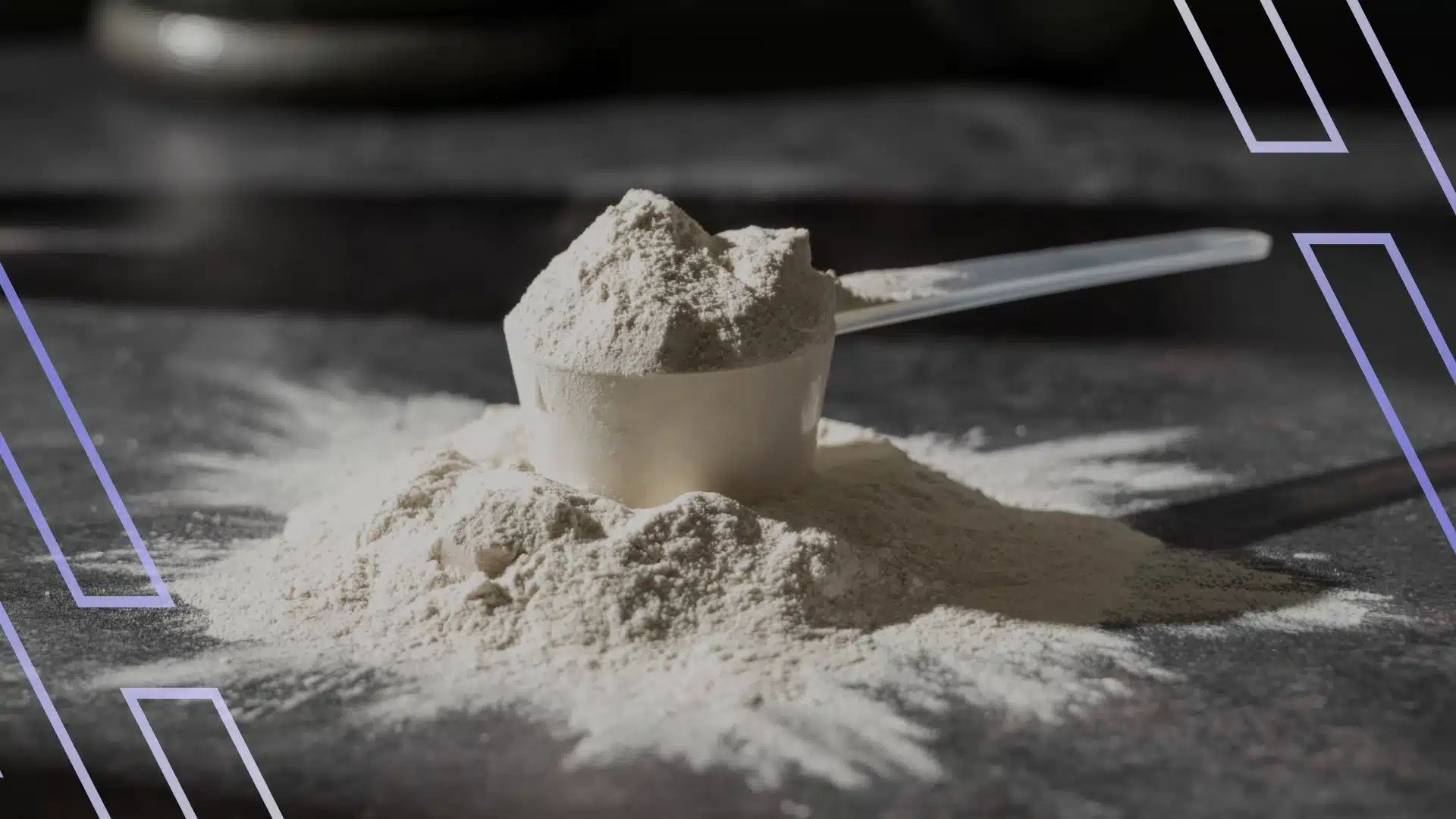
Protein powder is simply a food product, a convenient way to consume protein. It has no special muscle-building properties beyond its protein content. A scoop of whey protein has the same effect as eating an equivalent amount of chicken breast or Greek yogurt. It is useful when hitting daily protein targets through whole food alone is difficult, expensive, or inconvenient. It is not a supplement in the performance-enhancing sense.
So: creatine is a tool; protein powder is an ingredient. A tool changes what you can do: creatine lets you grind out a rep or two more, which compounds into more growth over time. An ingredient is just a convenient way to hit a number you could hit with food. You don’t compare a tool to an ingredient. You ask whether you need each one.
How They Compare
| Factor | Creatine | Protein Powder |
|---|---|---|
| Primary function | Energy system support | Protein source |
| Direct muscle-building effect | Indirect (via performance) | Yes (via protein intake) |
| Evidence quality | Very high | High (as food, not supplement) |
| Daily dose | 3–5g | As needed to hit protein target |
| Timing | Anytime, consistent daily use | Flexible |
| Can you get it from food? | Yes (red meat) but inefficiently | Yes, easily |
The Evidence for Each
Creatine monohydrate is the most extensively researched supplement in sports science. Hundreds of studies over three decades consistently show improvements in strength, power output, and lean mass gains when combined with resistance training. It is safe for long-term use in healthy adults.
Protein powder is backed by the same evidence base as dietary protein in general; it is well-established that adequate protein intake supports muscle synthesis and retention. The supplement form offers no advantage over whole food sources when total daily intake is equal.
Who Needs What
Asking whether to buy creatine or protein powder is like asking whether dinner needs a sharper knife or more vegetables. Both can improve the meal. Neither substitutes for the other. And if your cupboard’s already full of vegetables, what you might actually need is the knife.
Creatine is worth taking for most people who train consistently, regardless of goal. Strength, muscle gain, and fat loss phases all benefit from maintained training performance. Dose: 3–5g daily. You do not need a loading phase, but at this dose it takes three to four weeks to fully saturate your muscles, where a week of higher doses gets there faster. You end up in the same place either way, so if you notice nothing in the first fortnight, that is expected.
Protein powder is worth taking only if you are struggling to meet your daily protein target (1.6–2.2g/kg) through food alone. If you can hit that target comfortably with meals, protein powder adds nothing.
Do you need both? Possibly. They serve different purposes. If your diet is protein-sufficient, creatine is the priority. If protein intake is consistently low, address that first.
Frequently asked questions
Should I take creatine every day or only on training days?
Every day. Creatine works by saturating muscle stores over time. Taking it daily maintains those stores regardless of whether you trained.
Does creatine cause water retention?
Creatine draws water into muscle cells, which typically adds half a kilo to a kilo and a half on the scale in the first week or two. This is not fat gain — it is intramuscular water, which is associated with improved performance.
Which protein powder is best?
Whey protein is the most researched and has a strong amino acid profile. Casein is slower-digesting. Plant-based blends (pea + rice) are a viable alternative for those avoiding dairy.
Sources & further reading
- Kreider et al. (2017), J Int Soc Sports Nutr — creatine position stand
- Jäger et al. (2017), J Int Soc Sports Nutr — protein position stand
- Morton et al. (2018), Br J Sports Med — protein meta-analysis
- Hultman et al. (1996), J Appl Physiol — creatine loading & saturation
All Gymverse articles are reviewed against current research. See our full References & Research page.
Turn what you just learned into a training plan that works for you. Personalized structure. AI coaching. Real progress.
START TRAINING →