How Much Protein Do You Really Need? The Science Explained
How much protein should you eat per day for muscle and fat loss? Learn what the research says, how to calculate your target, and the best sources.
 By Amnon V. ·
TL;DR
Protein Matters More Than Most People Realize
Protein is the one macro most people manage to both overthink and under-eat at the same time. They worry about timing, sources, and shakes, while quietly falling short of the only number that actually matters: the daily total.
There’s a floor and a ceiling, and the useful range lives between them. Around 1.6 g/kg is where most of the benefit is already banked; push past it and each extra gram does a little less. By roughly 2.2 g/kg you have comfortably covered what almost anyone building muscle needs. The exception is dieting: when you are eating less and want to hold onto muscle, going higher genuinely helps, and lean people in a hard deficit do better still at 2.5 g/kg and above. So treat 1.6–2.2 as the everyday band, not a wall. Land anywhere in that band and you’ve solved protein; everything else is fine-tuning.
Example: 70kg person → 112–154g protein per day.
Protein Needs Increase During Fat Loss
Higher protein intake helps preserve muscle while dieting. When eating in a calorie deficit, aim for the higher end of the range (2.2g/kg or above, and higher still if you are lean and dieting hard) to minimize muscle loss.
More Protein Does Not Always Mean More Muscle
Eating well past the ceiling is like overfilling a fuel tank. It doesn’t take you further; it just spills out the side. Your body uses what it needs for muscle and burns the rest as ordinary energy.
Above roughly 2.2g/kg, the muscle-building returns for someone eating at or above maintenance are small enough not to be worth chasing, and the extra mostly becomes additional calories. The one situation where going higher is worth it is dieting, where more protein measurably protects muscle. Eating significantly more than this range adds calories without adding muscle-building benefit.
Whole Foods Usually Work Just as Well as Shakes
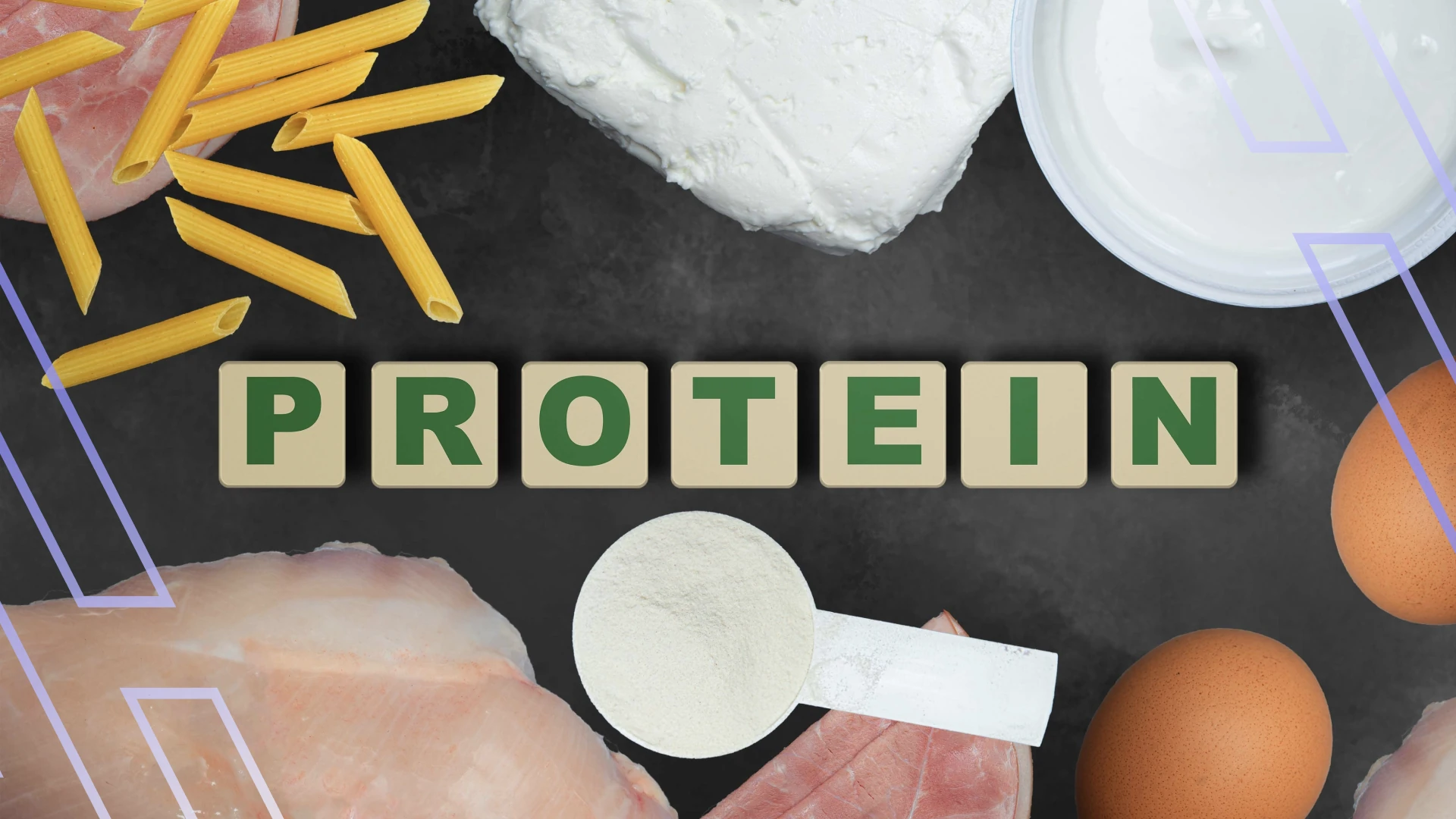
Best whole food protein sources:
- Chicken breast
- Eggs
- Tuna
- Greek yogurt
- Lean beef
Protein powder is a convenient supplement when hitting daily targets through food alone is difficult. It has no special muscle-building advantage over whole food sources.
Frequently asked questions
Is 100g protein enough?
Depends on bodyweight. For a 70kg person, 100g falls below the recommended range. Aim for at least 112g.
Can you eat too much protein?
If you are eating at or above maintenance, going much above 2.2g/kg adds little. If you are dieting, higher intakes are genuinely useful for holding onto muscle. The extra protein is used as energy.
Do you need protein immediately after workouts?
No. Daily total intake matters more than timing.
Sources & further reading
- Morton et al. (2018), Br J Sports Med — 1.6 g/kg meta-analysis
- Jäger et al. (2017), J Int Soc Sports Nutr — ISSN protein position stand
- Helms, Aragon & Fitschen (2014), J Int Soc Sports Nutr — protein during energy restriction
All Gymverse articles are reviewed against current research. See our full References & Research page.
Turn what you just learned into a training plan that works for you. Personalized structure. AI coaching. Real progress.
START TRAINING →