How Long Does It Take to See Results From Working Out?
How long before you start seeing changes from training? Learn when to expect strength gains, muscle growth, and fat loss — and what affects the timeline.
 By Amnon V. ·
TL;DR

Most people quit right before the part they were waiting for, not because they failed, but because nobody gave them the timeline. They expected the mirror to move at week four. It moves at week eight. Those four weeks of apparent nothing are where almost everyone gives up on something that was already working.
The Honest Timeline
| What changes | When it typically appears |
|---|---|
| Strength improvements | 2–4 weeks |
| Improved energy and mood | 1–3 weeks |
| Visible muscle definition | 6–8 weeks |
| Noticeable change in body composition | 8–12 weeks |
| Significant physical transformation | 3–6 months |
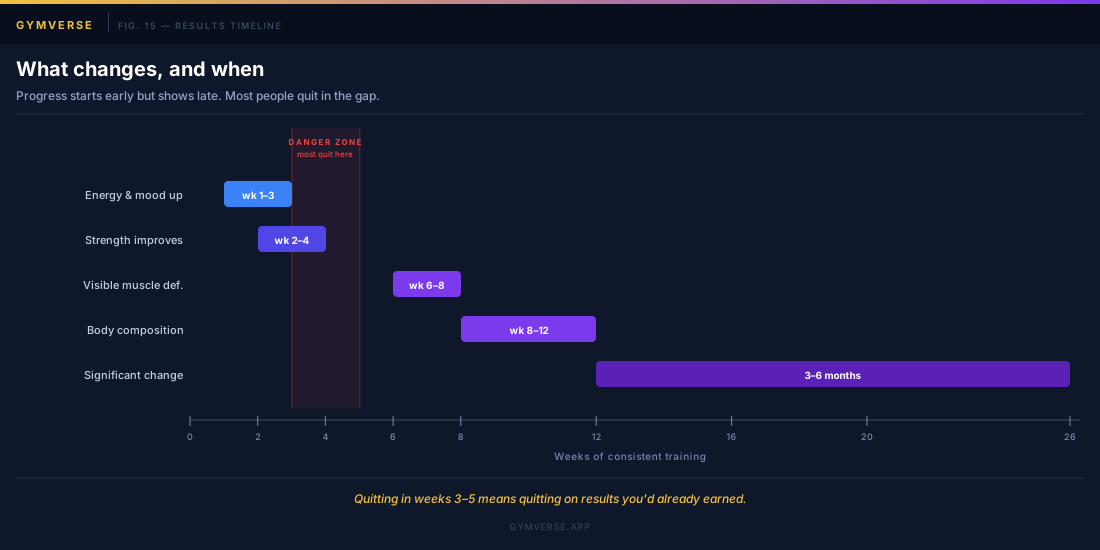
These timelines assume consistent training (3+ sessions per week), adequate protein intake, and appropriate calorie management for the goal. Without these, progress slows significantly.
There’s a built-in delay worth naming: the visible-results lag. Progress starts early: strength in week two, real progress happening under the surface, but it doesn’t show until weeks six to eight, after it works its way out through skin and fat. The work and the evidence are on different schedules. Quitting in the gap means quitting on results you’d already earned.
Why Early Strength Gains Feel Fast
The first strength gains are primarily neurological, not muscular. The nervous system becomes more efficient at recruiting motor units, the groups of muscle fibers that fire together during movement. This is why beginners often add 10–20% to their lifts in the first couple of months, and much more than that on movements they had simply never done before, all without much visible change in the mirror.
Here’s the part almost nobody is told: for the first few weeks, what looks like growth is mostly swelling from repairing the damage of unfamiliar training. Genuinely new muscle tissue becomes measurable around the two-month mark. The muscle fibers are growing, but the change is not yet apparent through skin and fat tissue.
The Fat Loss Timeline
Fat loss is visible earlier in some people due to initial water weight changes, particularly when beginning a dietary change. However, meaningful body fat reduction (enough to visibly change physique) requires 8–12 weeks of consistent deficit.
The most common pattern: scale weight drops modestly in the first 1–2 weeks (water and glycogen), stabilizes or fluctuates in weeks 3–5, then shows a clearer downward trend from week 6 onward if the deficit is maintained.
Why Most People Quit Too Early
A kettle heats the entire time it’s on, but it doesn’t whistle until the very end. Quitting at week four is switching off the kettle just before the whistle, and concluding that kettles don’t work.
The most common drop-off point in new training programs is weeks 3–5. This is after the novelty has worn off and before visible results have appeared. The effort-to-reward ratio feels poor at this stage, even though progress is occurring beneath the surface.
Understanding the timeline prevents this. Knowing that visible change arrives at 6–8 weeks, not 3, gives the effort context and makes the gap between starting and seeing results easier to sustain.
How to Measure Progress Before the Mirror Shows It
Track lifts: weight on the bar and reps completed are the most reliable early indicators of progress
Weekly photos: consistent lighting and conditions make changes visible that the mirror misses day-to-day
Energy and sleep quality: often improve within 2–3 weeks of regular training
Fit of clothing: often changes before the scale or mirror
Frequently asked questions
Why am I not seeing results after 1 month?
One month is early. Visible results typically require 6–8 weeks minimum. Check that training is consistent, protein is adequate, and calories align with your goal.
Do results come faster the second time you get in shape?
Yes. Muscle memory — the faster return of previously built muscle after a break — means people regain muscle faster than they originally built it. Part of that looks genuine, and part of it is that the first couple of kilos back are water and glycogen while your nervous system remembers the movements.
Why do some people see results faster than others?
Genetics, starting body composition, training consistency, sleep quality, and nutrition all vary between individuals. Direct comparison is not useful.
Sources & further reading
- Damas et al. (2016), J Physiol — hypertrophy timeline & early swelling
- Morton et al. (2018), Br J Sports Med — protein & lean-mass gains
All Gymverse articles are reviewed against current research. See our full References & Research page.
Turn what you just learned into a training plan that works for you. Personalized structure. AI coaching. Real progress.
START TRAINING →