Chest and Back Workout: The Best Antagonist Superset Routine
 By Amnon V. ·
TL;DR
- Yes, you can train chest and back together, and pairing them is efficient.
- Antagonist supersets cut session time by about half without dropping performance.
- The five best chest and back superset pairings, ranked.
- A full sample chest and back superset workout you can run in about 35 minutes.
- How this fits a push pull split, and where a chest and tricep workout fits instead.
- When antagonist supersets are the wrong choice.
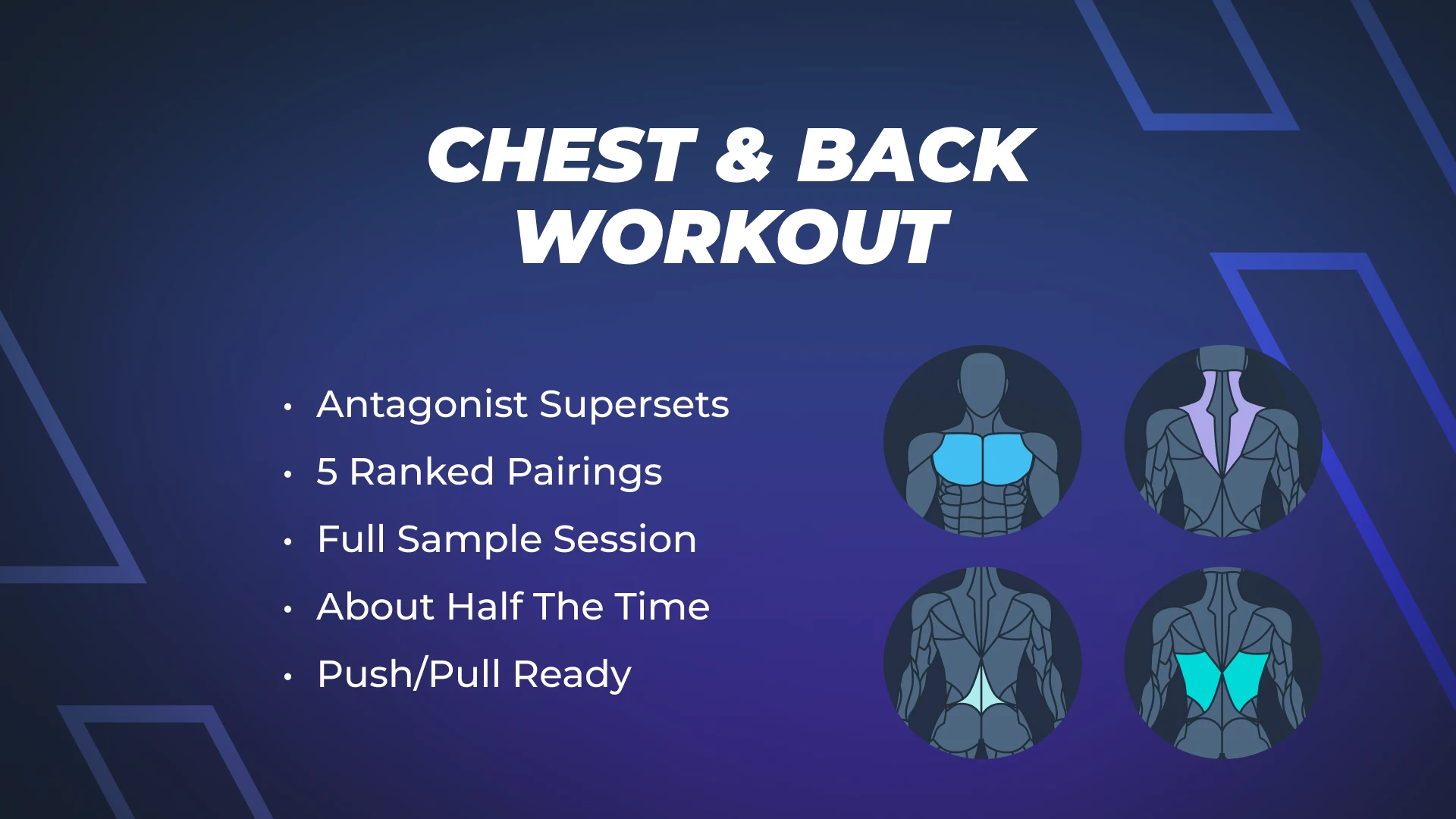
Chest day and back day usually eat two separate slots in your week. When time runs short, one gets skipped, and your pushing and pulling drift out of balance. A chest and back workout built as antagonist supersets solves both problems. You pair a press with a pull, let one muscle rest while the other works, and finish a complete session in close to half the time. This isn’t a hack. It’s how opposing muscle groups are built to be trained. Below you get the pairing logic, the best chest and back exercises to combine, and a full sample session. You also get the honest cases where supersets are the wrong call.
Can you train chest and back together?
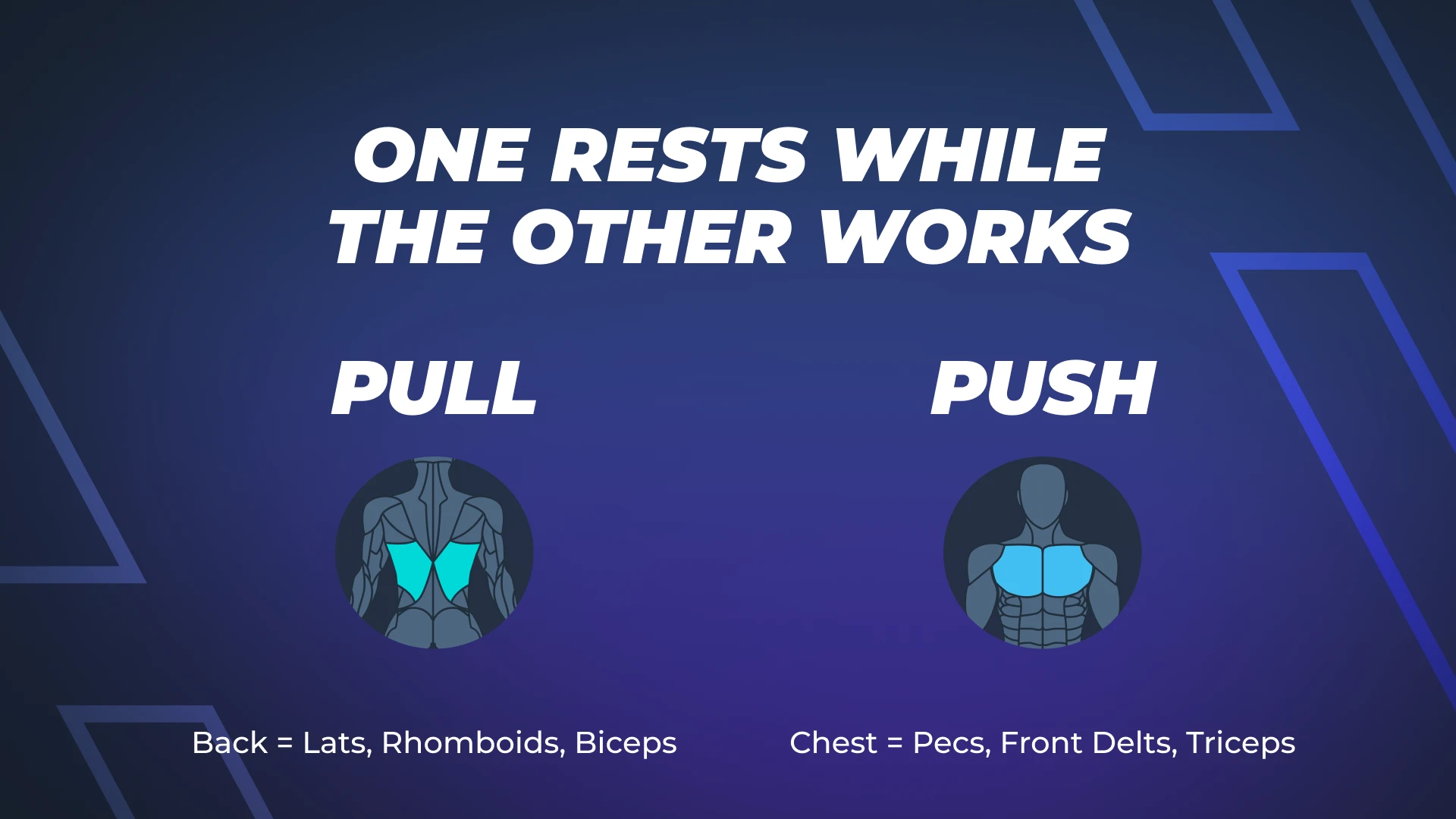
Yes. Chest and back are antagonist muscle groups. Your chest drives pressing and your back drives pulling, so the two produce opposite actions. You can train them in the same session, and pairing them is efficient. One muscle recovers while the other works, which removes the long idle rest of a standard routine.
Think in movement patterns. Pressing runs on the pectorals, front delts, and triceps. Pulling runs on the lats, rhomboids, and biceps. Bench press and dips are pressing. Rows and pull-ups are pulling. The prime movers barely overlap, so a hard pressing set leaves your back fresh. A hard pulling set leaves your chest fresh. That clean split is why a chest and back workout pairs so well, and it’s the same structure researchers use when they test antagonist paired sets.
Why train antagonist muscles like chest and back?
Antagonist supersets save time and can keep your performance high. Filling one muscle’s rest with work for the opposing muscle can cut a session’s length by about half. Pairing opposites this way doesn’t drop the quality of each set the way pairing the same muscle would.
That time saving matters. Lack of time is one of the most common reasons people stop resistance training, so a format that gives the same work in less time is worth using. Superset research backs the effect. Trained men who paired bench pull with bench press held a higher volume load per set than when they did the two lifts separately, and the paired format was far more efficient. Reviews of the method also point to a preload effect: contracting the antagonist first may raise activation in the muscle that follows, which can support reps and power. You train hard, save time, and usually keep your numbers up.
None of this replaces the basics. Progress still comes from progressive overload, enough weekly volume, and real effort. Our own method programs each muscle across 10 to 20 hard sets a week, trained about twice, with sets kept within 1 to 3 reps of failure. That volume range matches research on weekly sets and muscle growth, and training a muscle at least twice a week is a sound default for fitting the work in. Supersets help you fit that work into less time. They aren’t a reason to skip it.
Frequently asked questions
Can you train chest and back together?
Yes, and it's one of the most efficient ways to train. Chest and back are antagonists, so pairing a press with a row lets one muscle rest while the other works. You keep effort high, cut the idle rest, and finish a full push-pull session in less time than two separate days.
What is the best chest and back superset workout?
The best chest and back superset workout pairs a heavy press with a matching pull, then moves to lighter isolation pairs. A proven order is barbell bench press with a bench row, then incline dumbbell press with a lat pulldown, then a cable fly with a straight-arm pulldown. Run two to four sets per pair and keep 1 to 3 reps in reserve.
Why should you train antagonist muscles?
You train antagonist muscles together to save time and hold performance. Filling one muscle's rest with the opposing muscle's work can cut session length by about half, and pairing opposites doesn't lower set quality the way pairing the same muscle can. It also keeps your pushing and pulling balanced, which supports posture and shoulder health.
How long is a chest and back superset workout?
Most chest and back superset sessions run about 30 to 45 minutes, depending on the number of pairs and your rest. Because you work during what would normally be rest, you cover the same sets in less time than a standard layout.
Is a chest and back workout good for beginners?
It can be, with a lighter setup. Beginners should start with two pairs, pick machine or chest-supported versions to reduce balance demands, and keep several reps in reserve. Learn the movement first, then add load and a third pair as your form gets reliable.
Sources & further reading
- Paired sets of bench pull and bench press held higher volume load per set and were more time-efficient than the same lifts done separately: Robbins and colleagues (2010), Journal of Strength and Conditioning Research
- Agonist-antagonist paired sets can enhance short-term power and are an efficient way to build strength and power: Robbins and colleagues (2010), Agonist-Antagonist Paired Set Resistance Training: A Brief Review
- Superset training can cut session duration by roughly half versus traditional training, and lack of time is a leading barrier to resistance training: Mang ZA and colleagues (2025), Journal of Strength and Conditioning Research
- Antagonist paired sets tested in the lab include bench row with bench press and lat pulldown with overhead press: Behenck C and colleagues (2022), Journal of Strength and Conditioning Research
- Higher weekly set volume produces greater muscle growth in a graded dose-response, up to what recovery allows: Schoenfeld and colleagues (2017), Journal of Sports Sciences
- Training a muscle at least twice a week supports superior growth versus once a week: Schoenfeld and colleagues (2016), Sports Medicine
- Gymverse method: progressive overload, calibrated volume of 10 to 20 sets per muscle each week, and training each muscle about twice
- Full study and reference list: Gymverse References & Research
All Gymverse articles are reviewed against current research. See our full References & Research page.
Turn what you just learned into a training plan that works for you. Personalized structure. AI coaching. Real progress.
START TRAINING →