Cable Crossover: Best Variations for Chest Growth & How to Program Them
 By Amnon V. ·
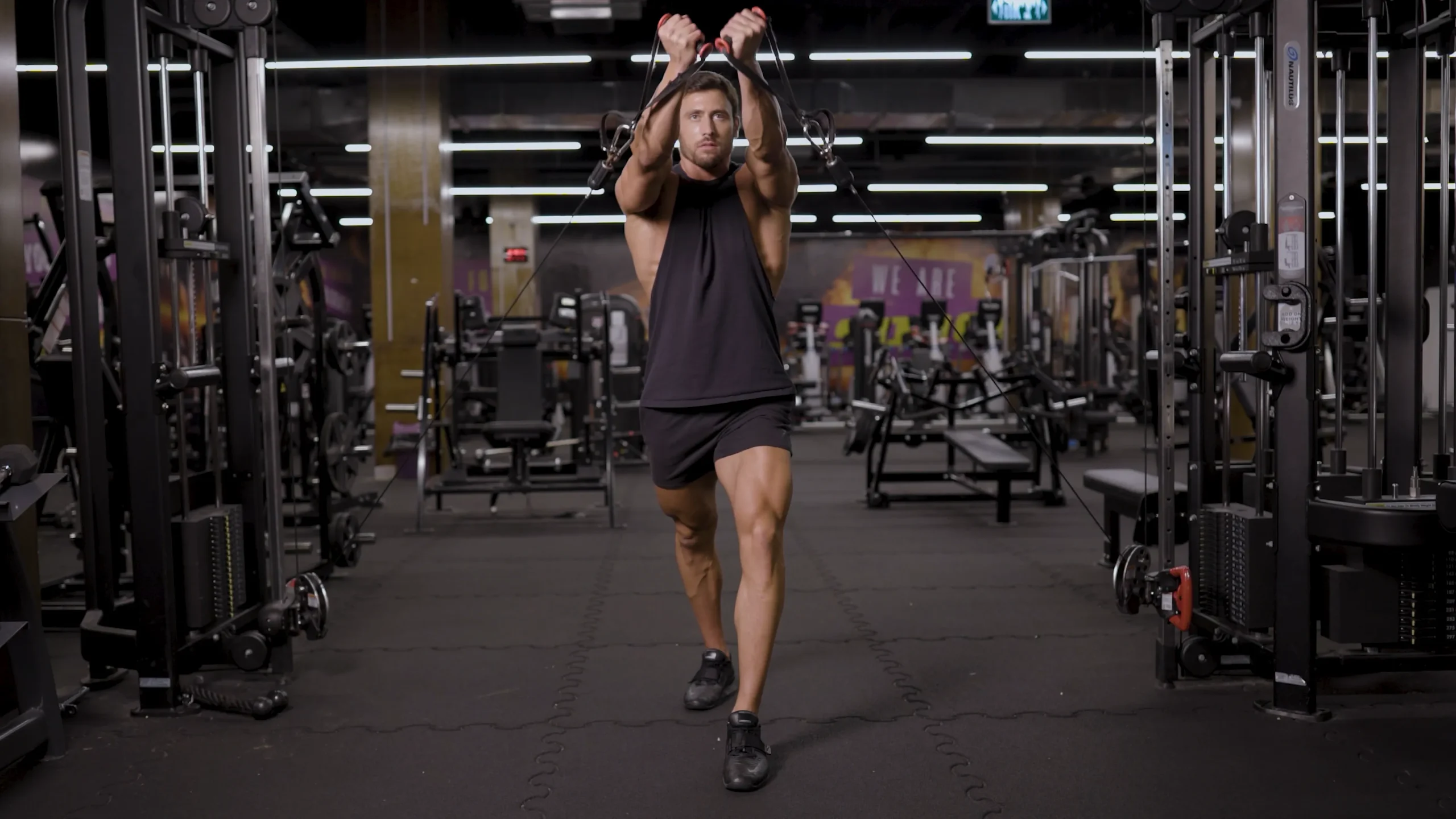
A lot of lifters treat the cable crossover as an afterthought. It’s just a movement you drift toward at the end of chest day, once your pressing is done and your arms are too fried to load a bar. You run a few sets, chase a pump, and walk out.
However, here’s what almost nobody tells you: the angle you pull from decides which part of your chest actually works. Pull from the wrong angle for your goal, and the exercise gives you a pump and nothing else. The stretch feels good, but the growth never shows up.
That’s why we’re covering what a cable crossover is, the muscles it trains, and the five best variations ranked by chest recruitment. You’ll also get the most common mistakes, how to program the movement into your week, and a chest finisher you can run at your next session.
What Is A Cable Crossover?
A cable crossover is a single-joint chest movement. You stand between two cable stacks, grab a handle in each hand, and pull them across the midline of your body against constant tension. Your elbows stay fixed in a soft bend the whole time, so the work happens at the shoulder, not the arm.
That constant tension is the point. On a dumbbell fly, the load drops off at the top of the rep because gravity pulls straight down and your arms stack over your chest. The cable keeps pulling sideways through the entire range, so your pecs stay loaded from the deep stretch all the way to the squeeze.
What Muscles Does The Cable Crossover Work?
The cable crossover trains one main muscle and leans on a few others for support:
- Pectoralis major (sternal and clavicular heads, depending on the angle you pull from)
- Anterior deltoid
- Serratus anterior
- Biceps and forearms as stabilizers holding the handle position
The pulley height is the variable that matters most. Where you set the cables decides which head of the pectoralis major does the work. Lauver and colleagues (2016) found the upper, or clavicular, chest reaches its highest activation around a 30° incline angle, while flatter angles spread the load across the sternal fibers. A low-to-high pull mimics that incline, and a high-to-low pull shifts the tension down toward the sternal and lower fibers.
5 Best Cable Crossover Variations For Chest Growth
We ranked these five by two things: how much of the chest each one recruits, and how easily you can load it over time. The higher a variation sits, the more it earns a spot as a main movement.
1) High-To-Low Cable Crossover

This is the crossover with both pulleys set high, pulling down and in toward your waist. It biases the lower and sternal portion of the pectoralis major (the part that shapes the bottom edge of the chest). Use it if you want fuller lower-chest development or a strong finisher after flat pressing.
How to do it properly:
- Set the pulleys as high as possible and grab the handles one at a time.
- Take a few steps in front of the machine with one foot in front of the other, lean slightly forward, and push the cables so your arms are straight.
- Slowly bring your arms out to the sides until you feel a stretch in your chest.
- Keep your elbows pointed back.
- Bring your arms back together at thigh-height.
- Keep your chest up throughout the movement.
2) Low-To-High Cable Crossover

Here you set both pulleys low and pull up and across toward your collarbones. This biases the clavicular head of the pectoralis major, which makes it a direct alternative to incline pressing. If your upper chest lags, this is the variation to prioritize.
How to do it properly:
- Set the pulleys as low as possible and grab the handles one at a time.
- Take a few steps in front of the machine with one foot in front of the other, lean slightly forward, and hold the cables by your sides.
- Bring your arms up and together to chest height.
- Hold the top position for a moment.
- Return to the starting position.
- Keep your chest up throughout the movement.
3) Mid-Height Cable Crossover (Standing Cable Fly)

This is the version most people default to, with the pulleys set at chest height and a straight pull across the body. It hits the sternal chest and works best as your main fly movement. The line of pull matches the fibers of the mid-chest, so it delivers the most balanced stimulus of the five.
How to do it properly:
- Set the pulleys at chest height and grab the handles one at a time.
- Take a few steps in front of the machine with one foot in front of the other, lean slightly forward, and push the cables so your arms are straight.
- Slowly bring your arms out to the sides until you feel a stretch in your chest.
- Keep your elbows pointed back.
- Bring your arms back together at chest height.
- Keep your chest up throughout the movement.
4) Single-Arm Cable Crossover
This is the crossover run one side at a time. Working one arm gives you a longer range of motion and lets you fix a side-to-side strength difference that a two-arm version hides. It also lets you brace and rotate slightly into the rep for a harder squeeze.
How to do it properly:
- Stand upright with the cable located at your side.
- At the starting position, have the pulley handle at chest level.
- Grip the pulley handle with the arm that is farthest from the pulley.
- Extend your arm across your body with your elbow slightly bent.
- Return to the starting position in a controlled manner.
- Avoid using momentum.
5) Incline Bench Cable Crossover
Here you set an incline bench between the two low pulleys and lie back on it, flying from a supported position. Lying back removes balance from the equation, so you can load it harder than any standing version. It combines the constant tension of the cable with the fixed angle of an incline.
How to do it properly:
- Place an incline bench, set around 30°, between two low pulleys.
- Grab a handle in each hand and lie back with your arms open wide.
- Keep a soft, fixed bend in your elbows.
- Pull your hands up and together over your upper chest.
- Squeeze for a beat at the top.
- Lower slowly until you feel the stretch across your chest.
Most Common Mistakes People Make
Most complaints about this exercise come down to four fixable errors. Here are the ones we see most:
You Are Turning It Into A Press
The crossover is a fly, not a press. When you bend and extend your elbow through the rep, you hand the work to your triceps and front delts and take it away from your chest. Keep the elbow angle fixed and let the movement happen at the shoulder.
You Are Standing Too Far Forward Or Too Far Back
Foot position changes the resistance profile and where the tension lands. Stand too far back and the load never challenges the shortened position. Drift too far forward and you lose the stretch at the bottom. Find the spot where tension stays on your chest through the full range.
You Are Going Too Heavy
Load the stack too heavy and your form falls apart. You twist your torso and use your bodyweight to swing the handles together, which turns a chest exercise into a whole-body heave. Pick a weight you can control with a fixed elbow and a still torso.
You Stop At Your Chest
Stopping your hands at chest width cuts out the most important part of the rep. That final stretch, where your hands cross the midline, is where the pec is shortest and doing the most work. Pull all the way through until your hands overlap.
How To Program Cable Crossovers
Where does the crossover belong in a chest session? After your pressing, not before it. Presses let you move the most load and drive the most tension, so they earn the first slots on your push day while you’re fresh. The crossover works best once your chest is warm and you want to finish it off.
For sets and reps, treat it as a hypertrophy movement. Schoenfeld, Ogborn, and Krieger (2017) found a graded dose-response between weekly sets and muscle growth, with roughly 10 or more sets per muscle group per week driving the best results.
Run 3 to 4 sets of 10 to 15 reps, and don’t obsess over the exact number. Research on load shows hypertrophy stays similar across a wide rep range, as long as you take each set close to failure.
Sample Chest Finisher
Run this at the end of your next chest day, after your main pressing is done:
- Low-to-high cable crossover: 3 sets of 12 reps, 60 seconds rest
- Mid-height cable crossover: 2 sets of 15 reps, 60 seconds rest
- High-to-low cable crossover: 1 set of 20 reps to failure, no rest, done
Cable Exercises To Pair With Your Crossovers
The cable stack does more than train your chest. These two movements pair well with your crossovers on the same day, so you get more out of one station.
Cable Lateral Raise
A cable lateral raise trains the lateral head of the deltoid by raising your arm out to the side against the cable. The cable beats dumbbells here because it keeps tension on the side delt at the bottom of the rep, where a dumbbell offers almost none. Stand side-on to a low pulley, grab the handle with your outside hand, raise your arm out to shoulder height with a soft elbow, then lower under control.
Cable Crunches
Cable crunches train the rectus abdominis by flexing your spine against a load from a high pulley. Unlike floor crunches, the cable lets you load your abs progressively and add weight as you get stronger, the same way you would on any other lift. Kneel below a high pulley, hold the rope at the sides of your head, crunch your ribs toward your pelvis by rounding your spine, then return under control.
What good is knowing five crossover variations if your gym doesn’t have the exact setup you just read about?
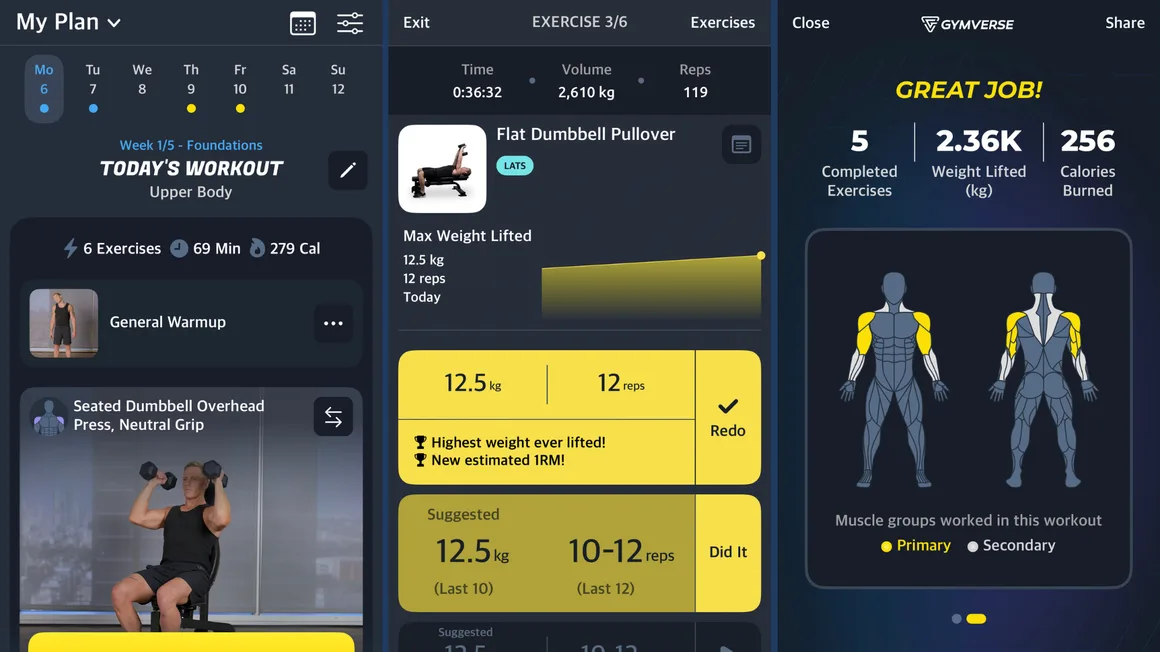
Gymverse solves that. The app builds your chest workouts around the equipment you actually have, whether that’s a full cable station, a single adjustable pulley, or a pair of dumbbells at home. Every one of its 1,000+ exercises comes with a video guide, so you see the exact angle, stance, and hand path before you touch the stack. Your plan adapts week after week as you get stronger, adding weight so you keep progressing instead of guessing.
Start your free 7-day trial and get a chest day built around your body and your gym. Find the app on both iOS and Android.
Conclusion
The cable crossover is only an afterthought if you treat it like one. The angle you pull from decides the result: low-to-high for the upper chest, mid-height for balanced sternal work, high-to-low for the lower fibers. Choose the angle that matches your goal, and the movement earns its place in your program.
Keep your elbow fixed, control the load, and pull all the way through the midline where your chest works hardest. Run it after your pressing, in the 10-to-15 rep range, for 3 to 4 sets.
Frequently asked questions
How do you do a cable crossover?
Stand between two cable stacks and hold a handle in each hand. Step forward into a staggered stance, keep a soft fixed bend in your elbows, and pull the handles across the midline of your body until your hands meet or overlap. Squeeze for a beat, then return under control until you feel a stretch across your chest.
What muscles does the cable crossover work?
The primary muscle is the pectoralis major. The anterior deltoid and serratus anterior assist, while your biceps and forearms stabilize the handle. The pulley height decides whether the sternal or clavicular head of the chest does most of the work.
Which cable crossover variation is best for the upper chest?
The low-to-high crossover. Pulling from low pulleys up toward your collarbones matches the fiber direction of the clavicular head. Lauver and colleagues (2016) found this upward angle drives the highest upper-chest activation, which makes it a direct alternative to incline pressing.
Should you do cable crossovers before or after pressing?
After. Presses let you move the most load, so they belong first while you're fresh. The crossover works best as a finisher, once your chest is warm and you want to add volume and tension.
Can you replace the bench press with cable crossovers?
No, the crossover is a single-joint isolation movement, while the bench press is a heavy compound that builds pressing strength and total chest mass. Use the crossover to add tension and target specific fibers, not to replace your main press.
Sources & further reading
All Gymverse articles are reviewed against current research. See our full References & Research page.
Turn what you just learned into a training plan that works for you. Personalized structure. AI coaching. Real progress.
START TRAINING →