Best Leg Press Alternatives for Home & Gym (When You Don’t Have the Machine)
 By Amnon V. ·
TL;DR
- You don’t need a leg press to build bigger quads and glutes.
- Best alternatives include hack squats, Bulgarian split squats, back squats, goblet squats, lunges, and step-ups.
- At home, combine 2–3 exercises using dumbbells, bands, or bodyweight.
- Aim for 10+ hard sets per week and train legs about twice weekly.
- Progress by gradually adding weight or reps while maintaining good range of motion.
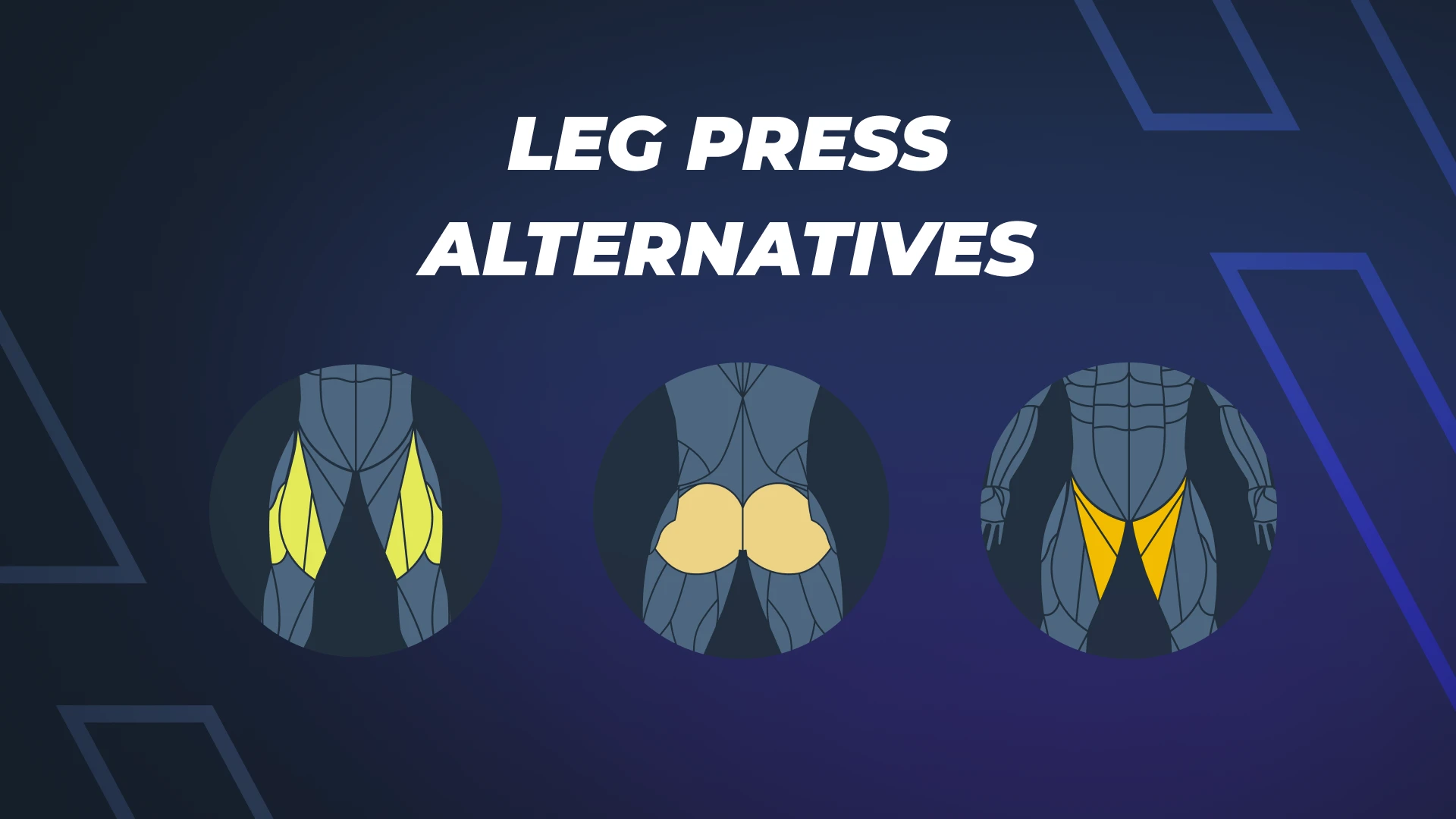
The leg press is great for building serious quad and glute size, but there is one obvious problem. You can’t exactly fit a leg press machine into a spare room or take one with you when you travel. When the gym is packed, the machine is broken, or you simply don’t have access to one, you need an alternative that still lets you train your legs hard.
So we’ll cover the best leg press alternatives for both the gym and home, ranked by how hard they load your quads and glutes. You’ll also see why these exercises work, the eight best exercises with form notes, a no-machine home version, how to program them, and the mistakes that quietly stall your legs.
What Can You Do Instead of the Leg Press?
The best moves are compound squats and lunges that load the same muscles (the quadriceps, gluteus maximus, and hamstrings, through a similar knee and hip bend).
For example, a goblet squat, a Bulgarian split squat, or a hack squat can replace it without you losing quad or glute size. Squat-pattern exercises drive the quadriceps and glutes hard on their own (Applied Sciences, 2026).
The 8 Best Leg Press Alternatives, Ranked
We ranked these eight moves by how hard they load the quads and glutes, from the heaviest gym options to the ones you can do at home with almost nothing.
1) Barbell Hack Squat
The barbell hack squat, with the bar behind your heels, keeps the load close to your center and drives the quadriceps almost as hard as a machine hack squat. It sits at the top of the list because it lets you load heavy while keeping the torso upright, which shifts tension onto the quads.
Form note: keep the bar close to your legs and push through your midfoot.
2) Bulgarian Split Squat
The Bulgarian split squat puts one leg behind you on a bench and forces each leg to work on its own, which fixes the strength gaps a two-legged press hides. It loads the quadriceps and gluteus maximus hard with only a pair of dumbbells, so it ranks high for both the gym and home (BMC Sports Science, 2025).
Form note: let your front knee travel forward over your toes to bias the quad.
3) Hack Squat

The machine hack squat is one of the closest matches to the leg press, with your back supported and the movement following a fixed path. If you’re training at home, the landmine hack squat gives you a similar squat pattern using one end of a barbell.
Form note: keep your whole foot planted and push through the floor.
4) Barbell Back Squat
The back squat is one of the most complete lower-body exercises, training your quads, glutes, hamstrings, and core in one move. It ranks in the middle of this list only because it demands more balance and mobility than the leg press, not because it’s less effective for building muscle.
Form note: brace your core and sit down between your hips, not straight back.
5) Dumbbell Goblet Squat
The goblet squat holds a single dumbbell or kettlebell at your chest, which keeps you upright and drives the quads through a deep knee bend. It’s the friendliest swap for beginners and home lifters, since one bell replaces a whole machine and the front-loaded weight coaches good form on its own.
Form note: keep your elbows inside your knees at the bottom and your chest tall.
6) Dumbbell Walking Lunge

The dumbbell walking lunge trains each leg through a long range while your glutes fight to stabilize every step. It doubles as conditioning, so it builds the quads and glutes while raising your heart rate.
Form note: take a long enough step that your front shin stays close to vertical.
7) Dumbbell Step-Up

The step-up onto a box or bench is a glute- and quad-dominant move that scales from bodyweight to heavy dumbbells. It needs almost no space or gear, which makes it a reliable leg press alternative at home.
Form note: drive through the heel of the top foot and avoid pushing off the floor with your back leg.
8) Banded or Bodyweight Squat

The resistance-band squat and the regular bodyweight squat sit at the base of the list because they load the least, but they still train the exact same pattern with zero machines. They are the fallback when you have no equipment and the reason you can never truly skip leg day.
Form note: slow the lowering phase down to three seconds to make light resistance feel heavy.
Leg Press Alternatives Compared
Here’s how the eight moves stack up on load, equipment, and where they fit best.
| Exercise | Main muscles | Equipment | Best for |
|---|---|---|---|
| Barbell hack squat | Quadriceps | Barbell | Heavy quad loading |
| Bulgarian split squat | Quads, glutes | Dumbbells | Fixing side-to-side gaps |
| Hack squat (machine/landmine) | Quadriceps | Machine or barbell | Closest machine match |
| Barbell back squat | Quads, glutes, hamstrings | Barbell | Overall size and strength |
| Kettlebell goblet squat | Quadriceps, glutes | One kettlebell | Beginners and home |
| Walking lunge | Quads, glutes | Bodyweight or dumbbells | Range and conditioning |
| Dumbbell step-up | Glutes, quadriceps | Box + dumbbells | Small spaces |
| Banded/bodyweight squat | Quads, glutes | Band or none | No-equipment days |
Can You Replace the Leg Press With Squats?
Yes, a loaded squat trains the same quadriceps and gluteus maximus that the leg press targets, and free-weight squats add the core and balance work the machine leaves out.
The trade-off is that you can’t push the same near-maximal loads without having to balance the weight. If you are recovering from injury or chasing a top-end quad load, a machine hack squat is the closest match, while everyone else can build just as much muscle with squats and lunges (Frontiers in Sports and Active Living, 2021).
No-Machine Leg Day: A Full Body Workout at Home
You can train your whole lower body, and turn it into a full body workout at home, with a kettlebell, a pair of dumbbells, or nothing at all. The key is stacking two or three of the alternatives above so the quads, glutes, and hamstrings all get hit.
Here’s a sample home session you can run start to finish:
| Order | Exercise | Sets | Reps | Rest |
|---|---|---|---|---|
| 1 | Kettlebell goblet squat | 4 | 8-12 | 90 sec |
| 2 | Bulgarian split squat | 3 | 8-12 per leg | 90 sec |
| 3 | Dumbbell step-up | 3 | 10-12 per leg | 60 sec |
| 4 | Walking lunge | 3 | 12-14 steps | 60 sec |
| 5 | Banded or bodyweight squat (burnout) | 2 | 20+ | 45 sec |
Note: The heaviest bilateral move, the goblet squat, comes first because you can load it hardest while you are fresh, and the burnout comes last to drain whatever is left. The 90-second rests on the main lifts let you repeat that hard effort, and the shorter 45- to 60-second rests on the accessory and burnout work keep the pump high (de Salles et al., 2009).
How to Program Your Leg Press Alternatives
Your results come down to volume, load, and progression, not the exact exercise you pick. Get these three right and any of the moves above will grow your legs.
- Volume: aim for about 10 or more hard sets for your quads and glutes each week to keep growing (Schoenfeld et al., 2017).
- Load and progression: add a little weight or a rep or two each week (the machine’s job of forcing progression now falls to you).
- Frequency: training legs about twice a week lets you spread your weekly volume across two sessions—which works better than one for most lifters—and is easy to split between a gym day and a home day (Schoenfeld et al., 2019).
Common Leg Press Alternative Mistakes
There are a few small habits that can stall your leg growth like…
- Going too light because you’re no longer using a machine, so the sets never get hard enough.
- Cutting the squat or lunge short instead of working through a deep, controlled range where your quads and glutes are challenged.
- Only ever training both legs together, which can let your stronger side carry the weaker one.
- Keeping the same weight and reps for months instead of adding load or reps as you get stronger.
What would your leg day look like if you never had to wait for the leg press again?
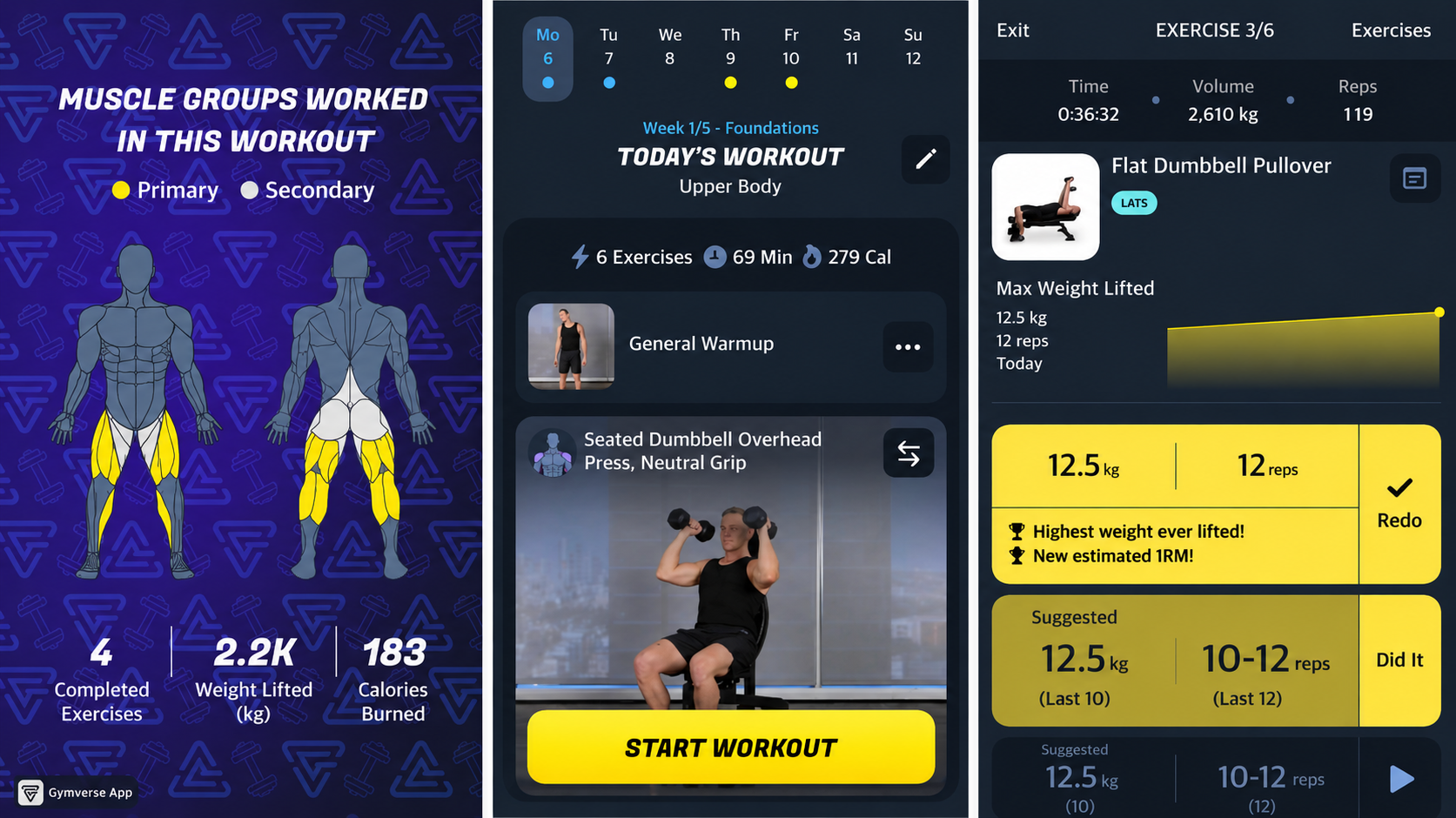
Gymverse builds a leg day around your equipment, your level, and your schedule, machine or no machine, and adjusts it as you get stronger. Start the free 7-day trial at Gymverse and train with a plan instead of guessing what to do.
Conclusion
You don’t need the leg press machine to build your quads and glutes, because the right squats, lunges, and step-ups can load the same muscles through similar knee and hip movements. For example, the barbell hack squat and back squat carry the heavy work in the gym, while the goblet squat and Bulgarian split squat work well in both the gym and at home.
If you have no equipment, use banded or bodyweight squats to keep your leg day going. And whether you have a full rack or a single kettlebell, you can build a hard leg session around the equipment you have.
Pick two or three of these alternatives, run the home session above, and add a little weight or a rep as you get stronger.
Frequently asked questions
What can I do instead of the leg press?
Use a compound squat or lunge that loads the same quadriceps, gluteus maximus, and hamstrings through a knee and hip bend.
What is the best leg press alternative?
The barbell hack squat tops our list because it drives the quads almost as hard as the machine while letting you load heavy with an upright torso.
Can I replace the leg press with squats?
Yes, a loaded squat trains the same quads and glutes the leg press targets and adds the core and balance work the machine leaves out. The only trade-off is that squats ask you to provide the stability that the machine would normally give you.
What is a good leg press alternative at home with no machine?
The kettlebell goblet squat is the best alternative. Pair it with Bulgarian split squats and step-ups, and finish with a banded or bodyweight squat.
How many leg press alternatives should I do in one workout?
Two or three is enough for most lifters, as long as they cover the quads, glutes, and hamstrings and add up to about 10 or more hard sets across the week.
Sources & further reading
All Gymverse articles are reviewed against current research. See our full References & Research page.
Turn what you just learned into a training plan that works for you. Personalized structure. AI coaching. Real progress.
START TRAINING →