Barbell Deadlift: 7 Mistakes That Are Killing Your Progress (And How to Fix Them)
 By Amnon V. ·
TL;DR
- Rounding your lower back under load is where your progress and your spine both suffer. Brace hard and hold a flat back.
- A drifting bar lengthens the lever on your back. Keep it over your midfoot and dragging your legs.
- Hips set too high or too low turn the pull into a stiff-leg or a squat. Find your hinge.
- Yanking the bar off the floor wastes force. Take the slack out first, then push.
- Hitching the bar up your thighs means the weight is too heavy. Drop it and earn full reps.
- Grip failing first ends sets before your legs are done. Fix it with straps or a stronger grip.
- Chasing heavier weight before your form holds stalls everyone. Add load slowly and log every set.
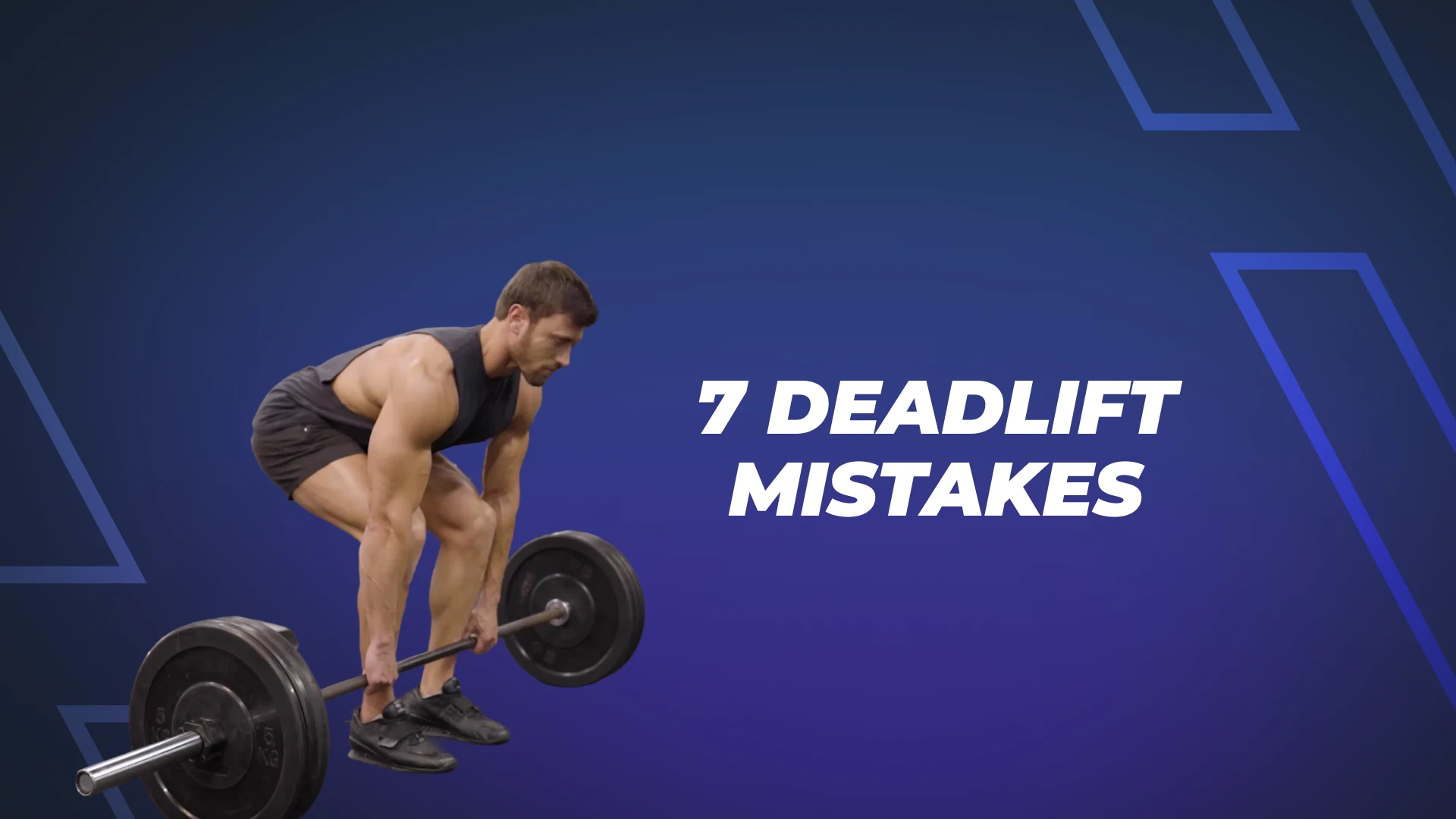
The barbell deadlift looks simple. Pick the bar up, put it down. That’s exactly why it’s so easy to get wrong. Most lifters don’t stall on the deadlift because they’re weak. They stall because a handful of small form errors quietly cap the weight they can move and leave their lower back sore for days. Fix those errors and the bar starts climbing again. This guide walks through the 7 most common barbell deadlift mistakes, why each one holds you back, and the exact fix for each. Whether you pull with a straight bar, swap to a trap bar deadlift, or slot the lift into a pull day workout, the same rules apply.
Mistake 1: Rounding your lower back under load
As the weight gets heavy, or as you tire late in a set, your hips can give out and your lower back rounds to finish the rep. First, the honest part. The idea that any rounding will instantly wreck your spine is overblown.
A 2026 narrative review argues that moderate lumbar flexion under load isn’t automatically harmful, especially for trained lifters, and that your spine is more adaptable than gym lore suggests (Cherni and colleagues, 2026).
Now the real risk. Under heavy load, and especially when you’re tired or new to the lift, hard rounding raises stress on the spine. It’s also where you lose force and stall. On a barbell pull the bar has to stay in front of your legs, which makes it easy to get tugged forward and round to compensate (Nuckols, Stronger by Science).
The fix: brace your whole trunk before you pull. Take a big breath into your belly and brace like you’re about to take a punch. Set a flat, near-neutral back, then keep it there through the rep. If your back rounds hard to grind a rep out, that rep’s too heavy or you’re too deep into the set, so stop the set. This is the honest answer to why your lower back hurts when you deadlift. For most people it’s load and fatigue, not the movement. Sharp or lasting pain is different, so stop and see a doctor or physiotherapist.
Mistake 2: Letting the bar drift away from you
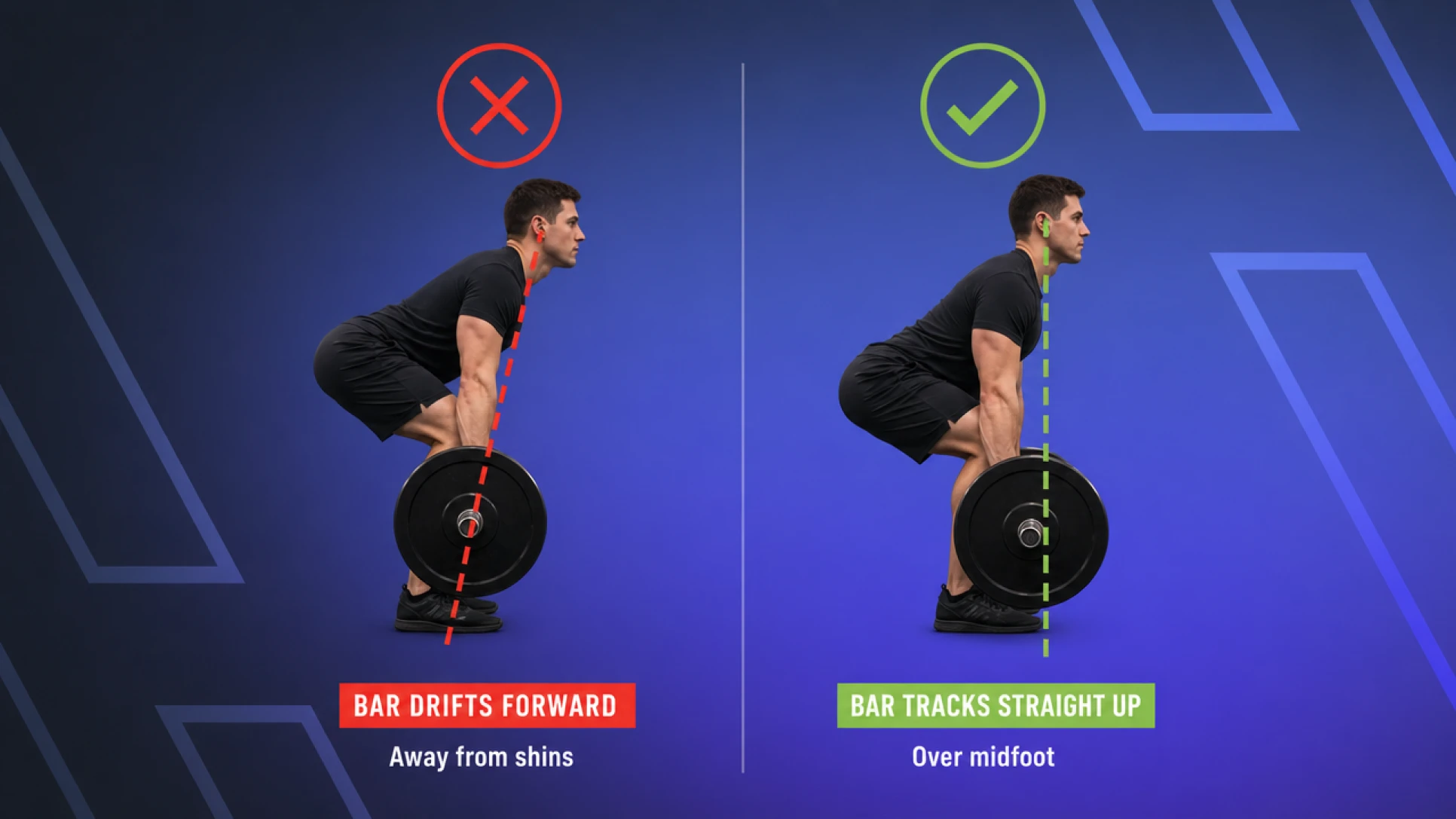
A bar that drifts forward, away from your shins, is one of the most common deadlift form errors. Every bit the bar travels out in front of you lengthens the lever arm on your lower back, so your spine works harder for the same weight.
The fix: start with the bar over your midfoot, not over your toes. Pull it back into your shins and keep it dragging up your legs the whole way. Squeeze your lats to hold it close, as if you were tucking your armpits over the bar. A bar that brushes your legs on the way up is a bar that stays over your base.
Mistake 3: Setting your hips too high or too low
The deadlift is a hinge. It’s not a squat, and it’s not a stiff-leg. Hips too low turns it into a squat you can’t finish, so the bar drifts and your hips shoot up anyway. Hips too high turns it into a stiff-leg that hammers your lower back before the bar even leaves the floor.
The fix: find the middle. Your hips sit between your knees and your shoulders, your shoulders slightly ahead of the bar, your shins close to vertical, your chest up. The exact height depends on your build, so longer legs sit a little lower and a longer torso sits a little higher. Set the position where the bar is over your midfoot and your back is flat, then pull from there.
Mistake 4: Yanking the bar without taking out the slack
Ripping the bar off the floor from a dead stop feels aggressive, but it wastes force and jerks you out of position. There’s play between the bar and the plates. If you snap into that play, your hips fly up before the bar actually moves.
The fix: take the slack out first. Grip down, then pull up gently until you feel the bar engage the plates and your body pulls tight. You’ll often hear a soft click. Now everything’s loaded and connected. From there, push the floor away with your legs instead of pulling with your back. Smooth beats violent every time.
Mistake 5: Hitching or ramping the bar up your thighs
Hitching is when you bounce or ramp the bar up your thighs in stages instead of one clean pull. People do it to force out a rep that’s too heavy. It hides a weak point and grooves a habit that falls apart under real load.
The fix: if you have to hitch, the weight’s too heavy for a clean rep. Drop the load, own the full range from floor to lockout, and build the strength to move it in one piece. Full, honest reps at a lighter weight beat ugly reps at a heavier one.
Mistake 6: Letting your grip fail before your back and legs
On heavier sets, your grip often quits before your legs and back are done. When that happens, the muscles you came to train never get the stimulus that actually drives progress.
The fix: match the grip to the job. For most back-off and volume work, pull double overhand and add lifting straps so your legs and back set the pace. For heavy sets, a hook grip or a mixed grip holds much more. One honest trade-off comes with the mixed grip. It can shift you slightly off-center, and on rare occasions lifters tear a biceps on the palm-up arm (Nuckols, Stronger by Science). Save it for your heaviest pulls and keep training your straight grip too. On a trap bar deadlift, the neutral handles solve most grip problems on their own.
Mistake 7: Chasing heavier weight before your form holds
The fastest way to stall is to add weight faster than your form and your body can absorb it. Big jumps feel like progress, but they wreck your positions. A 2026 review of deadlift injury prevention makes the case that managing load, fatigue, and trunk control matters more for your back than a picture-perfect neutral spine on its own (Cherni and colleagues, 2026).
Progressive overload works, but it’s a slow, steady climb, not a weekly max-out. Add a little load or an extra rep at a time. Keep most sets 1 to 3 reps shy of failure, a Reps in Reserve gauge that experienced lifters can read with reasonable accuracy (Zourdos and colleagues, 2016). Train the movement about twice a week across a sensible set count. More weekly volume tends to build more muscle (Schoenfeld and colleagues, 2017). Past what you can recover from, though, extra sets stop paying you back.
This is also where tracking earns its keep. If you’re guessing your last working weight, you’re either sandbagging or overreaching. Logging each set (weight, reps, and how hard it felt) turns progressive overload from a vibe into the plan. Our strength tracking and progress logs exist for exactly this, and Gymverse handles the load progression so each session lands in the productive zone.
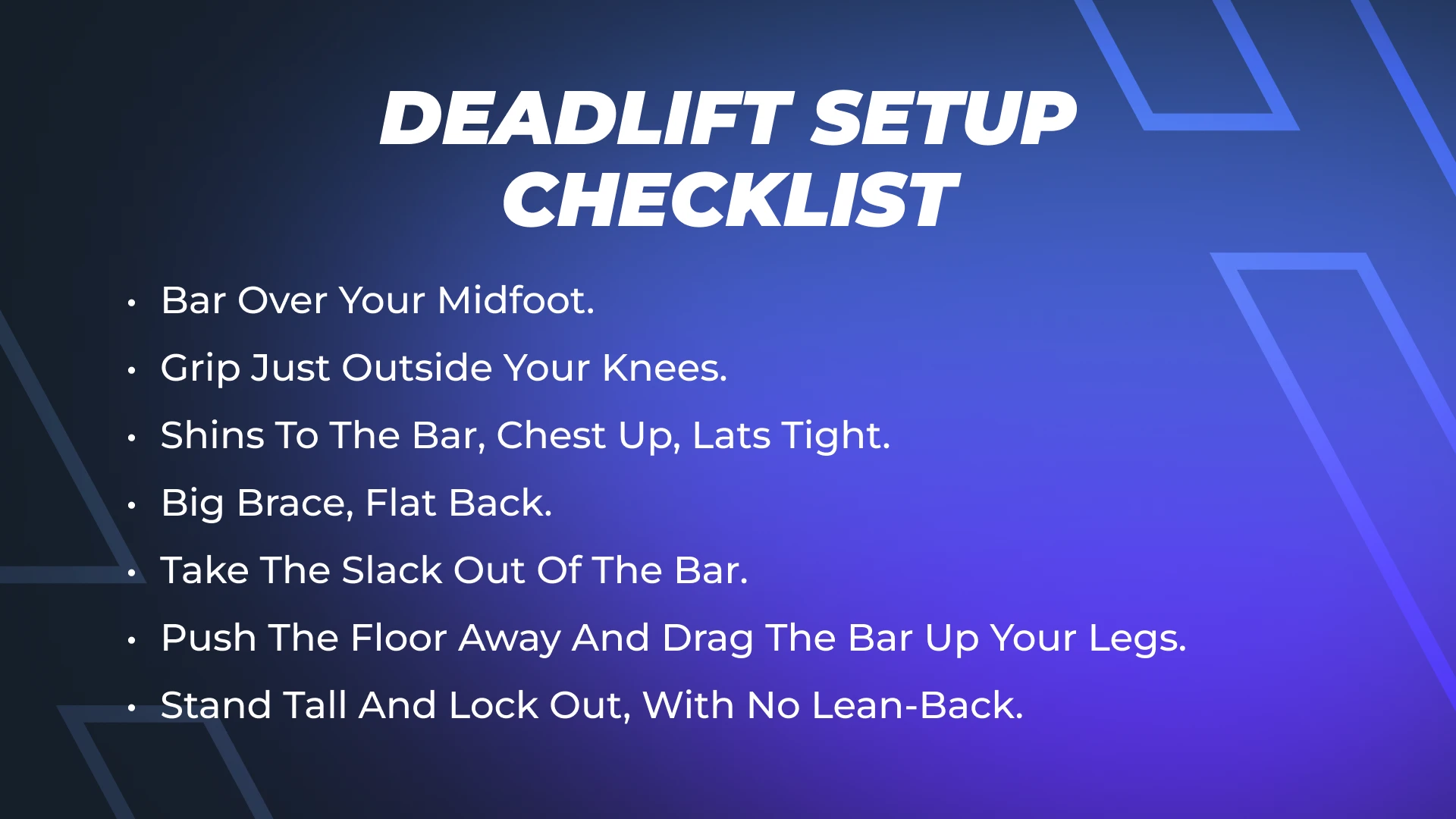
A beginner deadlift cue checklist
If you want one thing to run through before every rep, use this. It’s the short version of everything above, and it’s how to deadlift with correct form without overthinking it.
- Bar over your midfoot.
- Grip just outside your knees.
- Shins to the bar, chest up, lats tight.
- Big brace, flat back.
- Take the slack out of the bar.
- Push the floor away and drag the bar up your legs.
- Stand tall and lock out, with no lean-back.
Here’s the honest limit. An app can program your deadlift, cue you, and show you 500+ professional exercise videos for form. What it can’t do is watch your bar path in real time or feel your brace. Film a set from the side now and then, or get an in-person form check, and let the app run the plan and track your progress.
Frequently asked questions
What are common deadlift mistakes?
The most common barbell deadlift mistakes are rounding your lower back, letting the bar drift forward, and setting your hips too high or too low. Others include hitching the bar up your thighs, a grip that fails early, and adding weight too fast. Each one caps your progress, and each has a simple fix covered above.
How do I fix my deadlift form?
Fix one cue at a time and film yourself from the side so you can see what's really happening. Start with bar position over the midfoot and a hard brace, since those two solve most deadlift form errors. Run the setup checklist before each rep, and drop the weight the moment a rep forces you out of position.
Why does my lower back hurt when I deadlift?
Most deadlift-related back soreness comes from rounding under heavy load or fatigue and from adding weight too quickly, not from the deadlift itself. Brace hard, hold a flat back, and progress load slowly. Sharp, sudden, or lasting pain is different. Stop and see a doctor or physiotherapist before you pull again.
Is the trap bar deadlift easier on your lower back than the barbell?
For most people, yes, the trap bar deadlift puts less load on the lower back. Because you stand inside the bar, your torso stays more upright, and the peak spine and hip demands run lower than a conventional barbell deadlift (Nuckols, Stronger by Science). If your back feels cranky on straight-bar pulls, the trap bar is a smart swap that still builds the same posterior chain.
Should I deadlift on push day or pull day?
Deadlifts belong on a pull day or a leg day, not a push day. They train your posterior chain, not your pressing muscles. If you run a push/pull/legs split, anchor your heavy pulling around the deadlift and build the rest of the week the way we lay out a push day.
Sources & further reading
- Moderate lumbar flexion under load isn't automatically harmful, and load and fatigue management matter more than rigid spine position: Cherni B, Marzouki H, Selmi O, Al Attar W, Chamari K, Suzuki K. Beyond the Neutral Spine: A Narrative Review and Modern Framework for Low Back Injury Prevention in Deadlifting. Sports, 2026, 14(4):151
- The barbell must stay in front of the legs (easy to get pulled forward), lower peak spine and hip demands on the trap bar, and the mixed-grip biceps-tear risk: Nuckols G. Trap Bar Deadlifts are Underrated. Stronger by Science
- Reps in Reserve as a gauge lifters can read with reasonable accuracy: Zourdos MC, Klemp A, Dolan C, et al. Novel Resistance Training-Specific Rating of Perceived Exertion Scale Measuring Repetitions in Reserve. Journal of Strength and Conditioning Research, 2016, 30(1):267-275
- More weekly training volume tends to build more muscle: Schoenfeld BJ, Ogborn D, Krieger JW. Dose-response relationship between weekly resistance training volume and increases in muscle mass. Journal of Sports Sciences, 2017, 35(11):1073-1082
- The Gymverse Method and 500+ professional exercise videos: Gymverse
- What to expect from your training over time: Gymverse, How Long Does It Take to See Results From Working Out?
All Gymverse articles are reviewed against current research. See our full References & Research page.
Turn what you just learned into a training plan that works for you. Personalized structure. AI coaching. Real progress.
START TRAINING →