Cable Crunches: The Most Underrated Ab Exercise You’re Not Doing
 By Amnon V. ·
TL;DR
- Cable crunches keep constant tension on your abs and allow progressive overload.
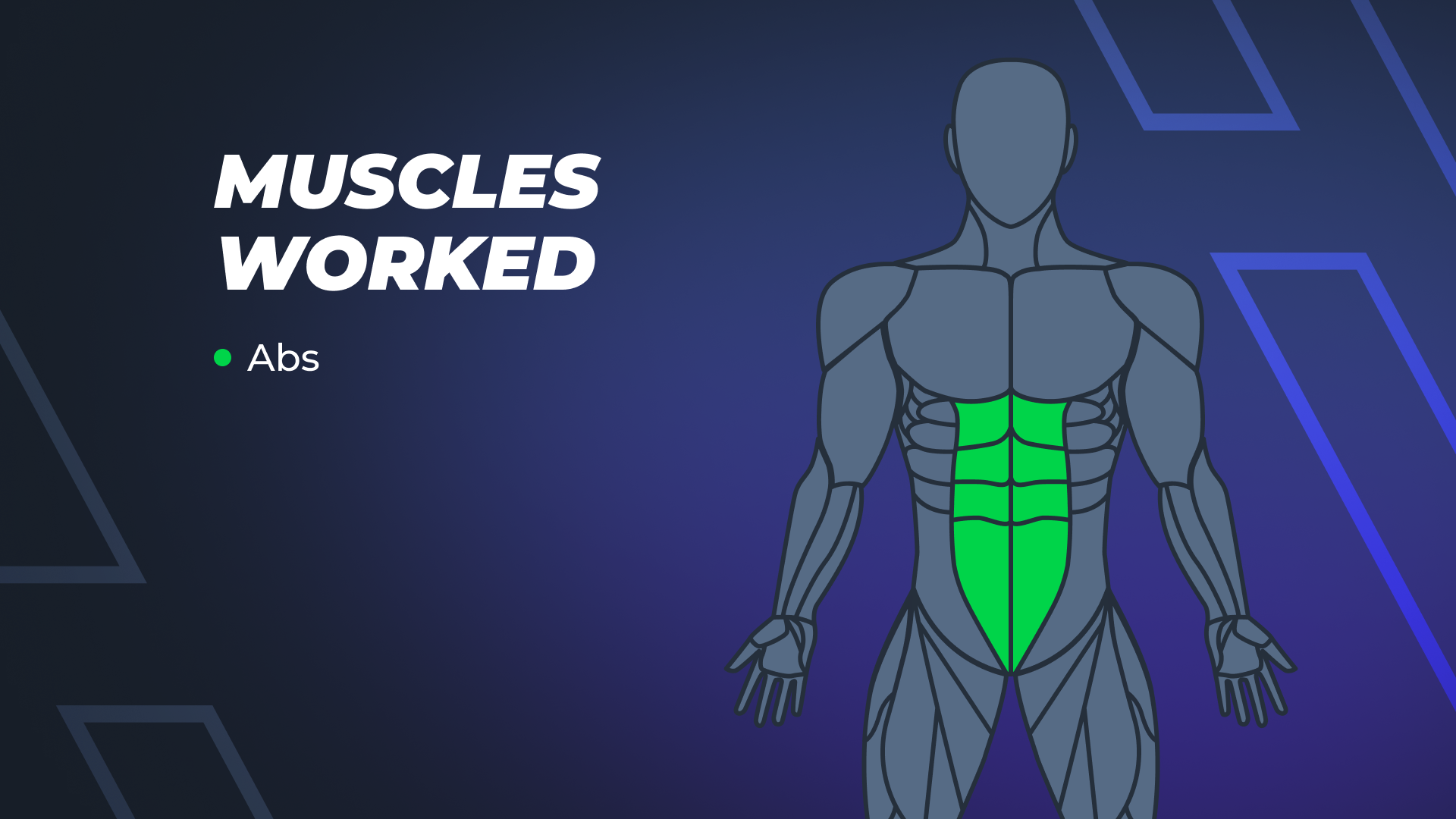
- They primarily target the rectus abdominis, with the obliques and core stabilizers assisting.
- Compared with floor crunches and sit-ups, they offer better loading and consistent resistance.
- Use controlled spinal flexion, keep your hips still, and avoid pulling with your arms.
- Train for 2–4 sets of 10–20 reps and increase weight as your form improves.
Most people train their abs with floor crunches and sit-ups. They grind rep after rep, then wonder why their core never seems to change. The exercise feels hard, so it can be frustrating when you don’t see the results you expected.
But the problem is that a regular crunch loses a lot of tension at the top of the rep, right when you want your abs to keep working. You reach the top, the resistance drops, and your abs get a brief break before the next rep.
The good news is that the cable crunch fixes that. It keeps tension on your rectus abdominis throughout the movement, giving your abs more work to do from rep to rep.
That’s why in this guide we cover what a cable crunch is, the muscles it works, and the benefits it gives you. Then we’ll show you how it compares with floor crunches and sit-ups, how to do it right, and the mistakes that get in the way. Lastly, you’ll get a simple way to progress the weight and a sample cable ab circuit you can try right away.
What Is a Cable Crunch?
A cable crunch is a weighted ab exercise you do on a cable machine. All you have to do is attach a rope to the high pulley of a cable crossover station, then flex your spine against the resistance of the weight stack. In other words, you curl your ribcage down toward your pelvis, and the stack pulls back the whole way.
Unlike a floor crunch, the cable never lets the tension drop. Your abs will stay loaded from the top of the rep to the bottom.
What Muscles Do Cable Crunches Work?
The main muscle worked is the rectus abdominis, the long muscle that runs down the front of your torso and creates the “six-pack” look. Its main job is spinal flexion, and the good news is that the cable crunch loads that movement directly.
In fact, a 2023 ultrasound study showed that crunch-type spinal-flexion movements preferentially activate the rectus abdominis (its upper segment in particular), confirming that loading spinal flexion trains the muscle directly.
That said, there are other muscles that work alongside it:
- The obliques (obliquus externus and internus) help stabilize your torso and resist rotation as you crunch.
- The transverse abdominis (transversus abdominis) acts as a deep stabilizer, helping you brace your core throughout the movement.
- The hip flexors (iliopsoas) can take over when your form breaks down, (that’s a problem we’ll cover later).
What Benefits Do Cable Crunches Provide?
- You get constant tension through the full range of motion, so your abs work on every inch of the rep instead of only the middle.
- You can add weight to the stack, meaning you can apply progressive overload to your abs the same way you would to any other muscle. In fact, research on muscle growth points to mechanical tension as a primary driver of hypertrophy, so loading your abs is key for growth.
- You train spinal flexion under load, which targets the rectus abdominis more directly than most bodyweight ab moves.
- If done right, it puts less strain on your lower back than loaded sit-ups.
Are Cable Crunches Good for Abs?
Yes, cable crunches are one of the best ab exercises because they load the rectus abdominis through its full range under constant tension. You can also add weight over time, so the movement keeps challenging your abs as they get stronger.
Cable Crunches vs. Sit-Ups and Floor Crunches
If you’ve only ever done floor ab work, then you’ll find the cable crunch very useful. The main differences are how much tension you get, how easily you can add weight, and the range of motion.
Floor crunches and sit-ups lose tension the moment you reach the top. Your abs get a break exactly when they should be working. However, the cable keeps pulling the whole time, so there’s no rest at the top.
Sit-ups and floor crunches are also capped at your bodyweight. Once they get easy, you can only add reps. But the cable crunch lets you add weight, which keeps the exercise hard as you get stronger.
Additionally, sit-ups pull heavily from the hip flexors and can stress your lower back. A 2010 study in the Journal of Orthopaedic & Sports Physical Therapy is one of several to show how heavily traditional sit-ups recruit the hip flexors — the same hip-flexor pull that loads the lower back. A proper cable crunch avoids that by keeping the work at the spine and on the rectus abdominis.
| Factor | Cable Crunch | Floor Crunch | Sit-Up |
|---|---|---|---|
| Muscle emphasis | Rectus abdominis | Rectus abdominis | Rectus abdominis + hip flexors |
| Constant tension | Yes, full rep | No, drops at top | No, drops at top |
| Progressive overload | Add weight to the stack | Add reps only | Add reps only |
| Range of motion | Full spinal flexion | Partial | Full, but hip-driven |
| Lower-back strain | Low with good form | Low | Higher |
How to Do a Cable Crunch Correctly

Doing a cable crunch correctly comes down to one rule: focus on your spine, not your hips. We’ll use the kneeling rope cable crunch as our main example. To do it properly:
- Hold the rope behind your head.
- Sit on your knees.
- Keep your hips fully extended while you crunch down by rounding your upper back.
- Return to the starting position in a slow and controlled manner.
- Avoid using momentum.
Another option is the standing cable crunch, which works well if your gym is busy or you prefer to stay on your feet. To do it properly:
- Face the machine and hold the rope at your forehead with your elbows tucked.
- Keep your hips still and your knees slightly bent.
- Crunch straight down by rounding your upper body, curling your ribs toward your hips.
- Rise back up slowly, keeping tension on your abs the whole way.
Most Common Cable Crunch Mistakes
The cable crunch looks simple (which is exactly why so many people do it wrong), but it’s not. Here are the mistakes we see most often.
You’re Pulling With Your Arms
Many lifters yank the rope down with their arms and shoulders instead of crunching their abs. The rope is only an anchor, your hands should stay fixed at your head, and your abs do all the work.
You’re Hinging at Your Hips
When lifters move up and down from the hips, they shift the load onto the hip flexors and take it off the rectus abdominis. The movement should be a spinal curl, not a hip fold. Your ribs should travel toward your pelvis, and your hips need to stay still.
You’re Going Too Heavy
When the load is too heavy, you stop rounding your spine and often start swinging, which kills the tension on your abs.
You’re Rushing the Eccentric
Letting the stack drag you upright fast wastes the best part of the exercise. Instead, control the return to keep your abs under tension longer and drive more growth.
How to Progress Your Cable Crunches
Your abs respond to progressive overload like any other muscle. You can’t run the same weight forever and expect change.
Work in a rep range around 10 to 20 reps for two to four sets. Add weight only when you can hit the top of that range with a full, controlled range of motion. If your form breaks before you finish the set, the weight is too heavy and you should drop it back down.
A Sample Cable Ab Circuit
The cable crunch works best as the anchor of a short core circuit, not as a lone exercise. Here’s a simple circuit you can run for three rounds:
- Cable Crunch: 12 to 15 reps, to load the rectus abdominis under constant tension.
- Cable Woodchopper: 10 to 12 reps per side, to train the obliques through rotation.
- Hanging Knee Raise: 10 to 15 reps, to hit the lower portion of the rectus abdominis.
- Rest 30 to 60 seconds between rounds.
Do You Want Abs That Keep Growing Without Guessing What to Do Next?
Gymverse builds you a personalized core and ab plan, then adds weight and reps for you as you get stronger. Every session tells you exactly what to lift and when to move up, so progressive overload happens on schedule instead of by accident. Our AI workout plans adapt to your level week after week, whether you train in a full gym, at home, or with limited equipment.
Start your free 7-day trial and get a plan built around your goals. Find the app on both iOS and Android.
Conclusion
The cable crunch is significantly better than floor work for three reasons: constant tension, load, and a full range of motion on the rectus abdominis. Floor crunches and sit-ups drop the tension at the top and cap you at your bodyweight. However, the cable keeps your abs loaded through every rep and lets you add weight as you get stronger.
Frequently asked questions
Are cable crunches good for abs?
Yes, they load the rectus abdominis through its full range of motion under constant tension, and you can add weight over time.
How much weight should I use for cable crunches?
Start light enough to control every rep and feel your abs do the work. Work in a range around 10 to 20 reps for two to four sets, and add weight only when you can hit the top of that range with a full range of motion. If your form breaks before the set ends, reduce the weight, it is too heavy.
Cable crunch vs sit-up: which is better?
For building and defining the rectus abdominis, the cable crunch is better. It keeps constant tension, lets you add load, and keeps the work at your spine instead of your hip flexors (it reduces lower-back strain).
How many reps and sets of cable crunches should I do?
Two to four sets of 10 to 20 reps works well for most people. Keep every rep controlled, and add weight when the top of that range starts to feel easy.
Do cable crunches burn belly fat?
No single exercise burns belly fat. Fat loss comes from a calorie deficit across your whole diet and training. Cable crunches build the rectus abdominis underneath, so your abs show once your body fat drops.
Can beginners do cable crunches?
Yes, start with light weight to learn the spinal-curl motion, keep your hips still, and focus on your control.
Sources & further reading
All Gymverse articles are reviewed against current research. See our full References & Research page.
Turn what you just learned into a training plan that works for you. Personalized structure. AI coaching. Real progress.
START TRAINING →