Dumbbell Floor Press: Why It Belongs in Your Upper Body Routine
 By Amnon V. ·
TL;DR
- The dumbbell floor press is a shoulder-friendly press that emphasizes the triceps and lockout strength.
- Its shorter range of motion limits the bottom stretch compared with the bench press.
- Use a controlled descent, let your upper arms touch the floor, and press to full lockout.
- Neutral and close grips increase triceps focus, while a pronated grip emphasizes the chest more.
- You only need dumbbells and floor space, making it a practical home chest exercise.
- Try 3–4 sets of 8–12 reps and progress by adding weight or reps with good form.
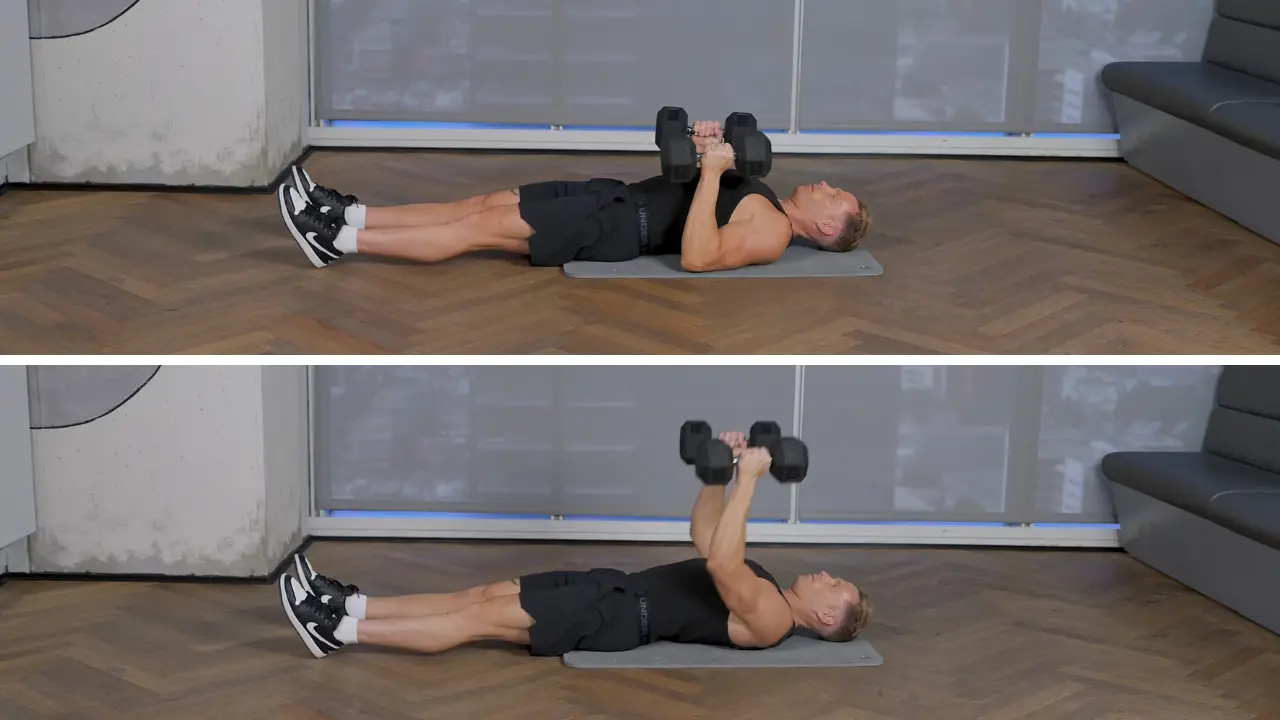
Most lifters walk right past the floor press. It looks like a bench press someone cut in half, so it’s easy to write it off as a watered-down version and move on. But doing that means missing out on a great exercise for triceps growth, lockout strength, and shoulder-friendly pressing.
The floor cuts your range of motion on purpose. Your elbows hit the ground before your upper arms can drop below your torso. That limit is actually what makes the exercise useful.
In this guide, we’ll break down what the dumbbell floor press is, the muscles it trains, and how to do it with clean form. We’ll also compare it to the bench press, cover its biggest benefits, flag the mistakes that stall progress, and give you a superset you can run at home or in a packed gym.
What Is A Dumbbell Floor Press?

The dumbbell floor press is a horizontal press you do lying flat on the floor with a dumbbell in each hand. You press the weights from the sides of your chest until your arms lock out, then lower them until your upper arms touch the ground.
The floor limits how far your elbows can travel at the bottom of the movement, giving you a shorter range of motion than what you would get on a bench press, where your arms can move into a deeper stretch.
If you’re still getting the hang of the movement, check our Exercise library. It had a video you can follow rep by rep.
What Muscles Does The Dumbbell Floor Press Work?
It trains your entire pressing chain, with a greater emphasis on the triceps than many other chest exercises.
- Pectoralis major: Your chest does most of the work as you press the dumbbells up and slightly toward your midline. Both the sternocostal and clavicular heads contribute to the movement.
- Triceps brachii: All three heads (long, lateral, and medial) help you press the dumbbells and finish each rep at lockout. Because the floor cuts off the deepest part of the descent and keeps you working through the lockout, your triceps take on more of the work — the top portion of any press is where they contribute most.
- Anterior deltoid: Your front delts assist with the press, helping you move the dumbbells from the bottom position to lockout.
- Serratus anterior and core: Your core keeps your ribs down and your torso flat against the floor, while the serratus anterior helps protract your shoulder blades as you finish each press at lockout. These muscles help keep you stable throughout the movement, keeping your ribs down and your body flat against the floor.
Note: The shorter range of motion makes this exercise a useful addition to a chest and triceps workout, especially when you want to build pressing strength without taking your shoulders as deep into the bottom position.
How To Do A Dumbbell Floor Press
This exercise’s form is simple, but you have to do it right. Otherwise you’ll risk not building as much strength and muscle as possible.
Here’s how to do it right:
- Lie on the floor with dumbbells at chest level, palms facing your feet (or face each other for a more shoulder-friendly, triceps-focused option).
- Press the dumbbells straight up until your arms are fully extended.
- Lower with control until your upper arms touch the floor, then repeat.
Modifying your grip changes what the movement targets:
- Neutral grip (palms facing each other): Easier on the shoulders and hits the triceps harder.
- Pronated grip (palms facing your feet): Puts more emphasis on the chest.
- Close grip (dumbbells close together): Turns the press into a triceps builder.
Dumbbell Floor Press vs. Bench Press
So, is the floor press as good as the bench press?
Not exactly. The floor press isn’t a replacement for the bench press, but it gives you a different way to train your pressing muscles (especially for people who are hurt or limited in some way).
The bench gives you a full stretch at the bottom, which helps build chest size. That same stretch can place more demand on your shoulders, especially when you’re using heavy weight. The floor press cuts that stretch short, giving you a shorter range of motion and putting more emphasis on the triceps.
| Factor | Dumbbell Floor Press | Dumbbell Bench Press |
|---|---|---|
| Range of motion | Shortened at the bottom (elbows stop at the floor) | Full stretch at the bottom |
| Shoulder stress | Lower, since the floor limits the stretch | Higher, especially with heavy weight |
| Muscle emphasis | More triceps and lockout | More chest stretch and pec activation |
| Equipment needed | Dumbbells and floor space | Dumbbells and a bench |
| Best for | Lockout strength, shoulder-friendly pressing, home training | Full-range chest development |
Note: Lifters with sensitive shoulders or a weak lockout can get a lot out of the floor press.
What Are The Benefits Of The Dumbbell Floor Press?
- It can be easier on your shoulders because the floor stops your upper arms before they can move too far behind your torso at the bottom.
- It builds triceps and lockout strength, which can carry over to a bigger bench press.
- You only need dumbbells and some floor space, so you can train your chest at home without a bench.
- It’s easy to get out of if a rep stalls because you can set the dumbbells down instead of getting pinned under a loaded bar.
- You can train one arm at a time to address side-to-side strength differences while also making your core work harder to keep you stable.
Common Mistakes To Avoid
There are a few form mistakes that can stall your progress. Here are the ones to watch out for:
You Are Bouncing Off The Floor
Slamming your elbows into the floor and rebounding uses momentum instead of controlled strength. The dead-stop pause is an important part of the exercise. If you skip it, you’ll lose some of the strength benefits of the movement.
Your Elbows Are Flaring Too Wide
Pressing with your elbows flared straight out to the sides puts more stress on your shoulders and takes some of the tension off your chest and triceps. Keep your elbows around 45° from your torso to keep the movement comfortable and the tension exactly where you want it.
You Can’t Feel Your Chest Working
A lack of chest engagement usually means the weight is too heavy and your triceps are doing most of the work. Reduce the load, slow down the lowering phase, and focus on pressing the dumbbells up and slightly together. Control is more important than weight in this situation.
You Are Cutting The Reps Short
Stopping before lockout or not letting your upper arms reach the floor makes an already-short range of motion even shorter. Use a full range from a dead stop to lockout to get the most out of each rep.
Sample Pressing Superset
Pair the floor press with a close-grip variation. It works well at home or in a busy gym where you want to get your work done without needing much equipment.
- A1) Dumbbell Floor Press: 4 sets of 8–12 reps (neutral or pronated grip)
- A2) Close-Grip Dumbbell Floor Press: 3 sets of 10–15 reps (triceps focus)
- Rest 60-90 seconds after each set.
Note: Bracing on the floor also makes your core work a bit to keep you stable. It gives you some extra core training as you press. Pair this with Ab workouts to round out your core training.
Do you want to do the floor press and every one of its variations right?
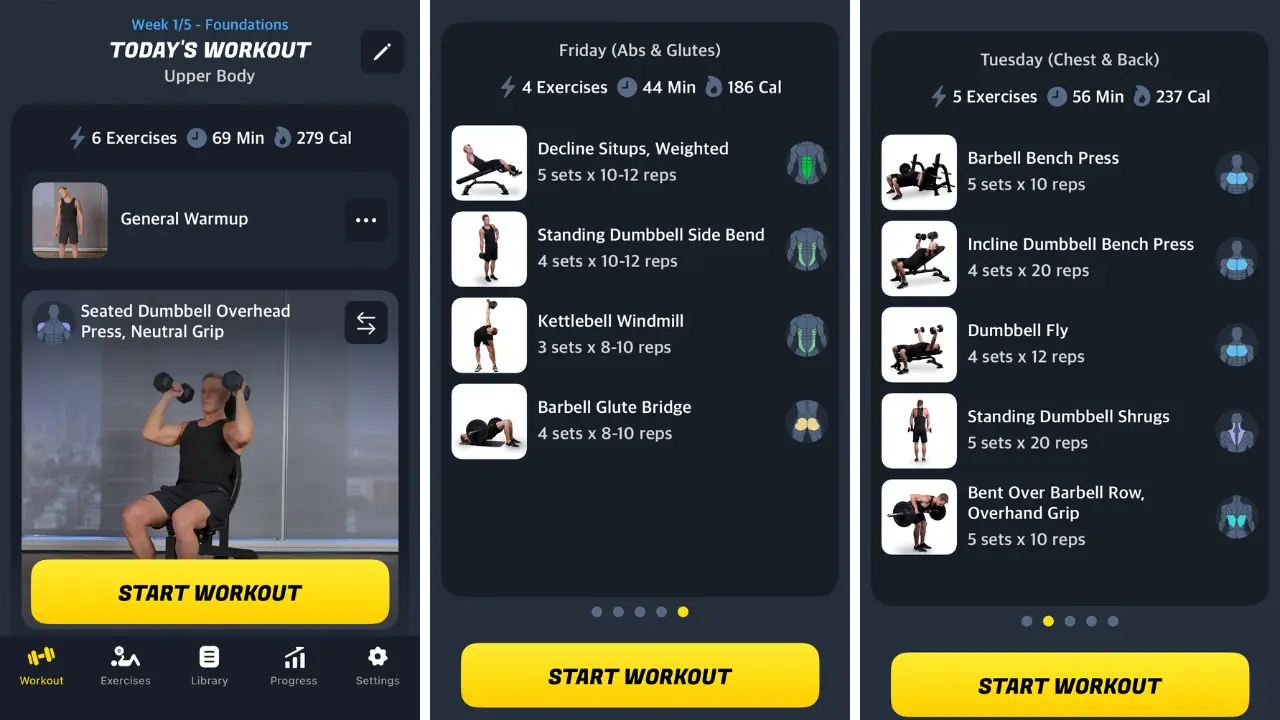
Gymverse builds you a personalized strength-training plan with over 1,000 exercises, each backed by a high-definition video guide that shows you the movement from every angle. Your plan adapts to your equipment, your schedule, and your goals, so whether you train in a full commercial gym or with two dumbbells on your living room floor, you always know what your next workout is.
Start your free 7-day trial and see how it works. Find the app on both iOS and Android.
Conclusion
The floor press is not a lesser bench press. It’s a shoulder-friendly, triceps-heavy press that shortens your range of motion on purpose, giving you more emphasis on the lockout and less movement at the bottom. So treat it as its own tool, not a backup for the bench press.
If you train at home, it can be a valuable chest exercise because you only need two dumbbells and a patch of floor. You can also set the weights down if you reach failure, so you don’t need a spotter.
Add it to your upper body routine, use full reps from a dead stop to lockout, and let your triceps and chest do the work. Stay consistent, and the floor press can help build the pressing strength you need for your other lifts.
Frequently asked questions
What muscles does the dumbbell floor press work?
It mainly trains your pectoralis major, with heavy involvement from all three heads of your triceps. Your anterior deltoid assists the press, and your serratus anterior and core stabilize your torso.
Is the dumbbell floor press as good as the bench press?
The bench press is much better for full chest development since it allows a deeper stretch. For lockout strength, triceps growth, and shoulder-friendly pressing, the floor press is the better choice.
Can you do the dumbbell floor press at home without a bench?
Yes, the floor press only needs dumbbells and floor space. That's exactly what makes it one of the best chest exercises for home training. The best thing is, you can bail out of a failed rep safely without a spotter or a rack.
Is the dumbbell floor press good for triceps?
It's fantastic for training your triceps. The floor stops your arms partway down, so you press from a dead stop with less chest stretch and more triceps drive. And a close grip pushes the triceps emphasis even higher.
How many sets and reps should you do?
3 to 4 sets of 8-12 reps builds strength and size for most lifters. For a triceps-focused close-grip version, 3 sets of 10-15 reps works well. Add weight or reps over time to keep progressing.
How much weight should a beginner start with?
Start light enough to complete every rep with clean form and a controlled dead-stop pause. A pair of dumbbells you can press for 12 reps with about two reps in reserve is a smart starting point.
Is the dumbbell floor press a compound exercise?
Yes, it moves your shoulder and elbow joints together and trains multiple muscle groups at once, including your chest, triceps, and shoulders.
Sources & further reading
All Gymverse articles are reviewed against current research. See our full References & Research page.
Turn what you just learned into a training plan that works for you. Personalized structure. AI coaching. Real progress.
START TRAINING →