Rear Delt Fly: Why You’re Probably Doing It Wrong (And How to Fix It)
 By Amnon V. ·

The biggest issue lifters face with rear delt flies is letting the larger muscles of the upper back (the traps and rhomboids) take over the movement. Those muscles are bigger and stronger than the rear delts, so they jump in the second the load gets heavy or the form slips. As a result, the rear delts get skipped, the upper back does the work, and your shoulders stay flat.
That’s why today we’ll cover what a rear delt fly actually is, the four mistakes wrecking your reps, how to do the movement right, and five alternatives that hit the rear and side delts better than most lifters realize.
What Is A Rear Delt Fly?
The rear delt fly is an isolation exercise that trains the posterior deltoid (the small muscle at the back of your shoulder). You perform it by raising your arms out to the sides against resistance from dumbbells, cables, or a dedicated machine. It builds width and definition at the back of the shoulder, which pulls the whole delt into a rounder, fuller look.
Most lifters know the movement, but few execute it right. The rear delt is small, tucked behind larger muscles, and because of that, it’s easy to bypass. That’s where the mistakes start.
Most Common Mistakes People Make
Rear delt flies look simple on paper. You raise, you lower, you repeat. But there are four common errors that turn the exercise into an upper back workout with almost no rear delt work at all.
Your Traps And Rhomboids Are Taking Over

When your traps and rhomboids take over, your shoulder blades squeeze together at the top of every rep. The bigger muscles handle the load first, and the rear delts get skipped. You’ll feel a burn between your shoulder blades and almost nothing at the back of your shoulder.
To fix this, keep your shoulder blades relaxed and focus on moving from the shoulder joint alone. Think about your arm rotating around the socket, not your back squeezing tight. If you can’t feel the rear delt working, reduce the weight.
You Are Lifting Too Heavy
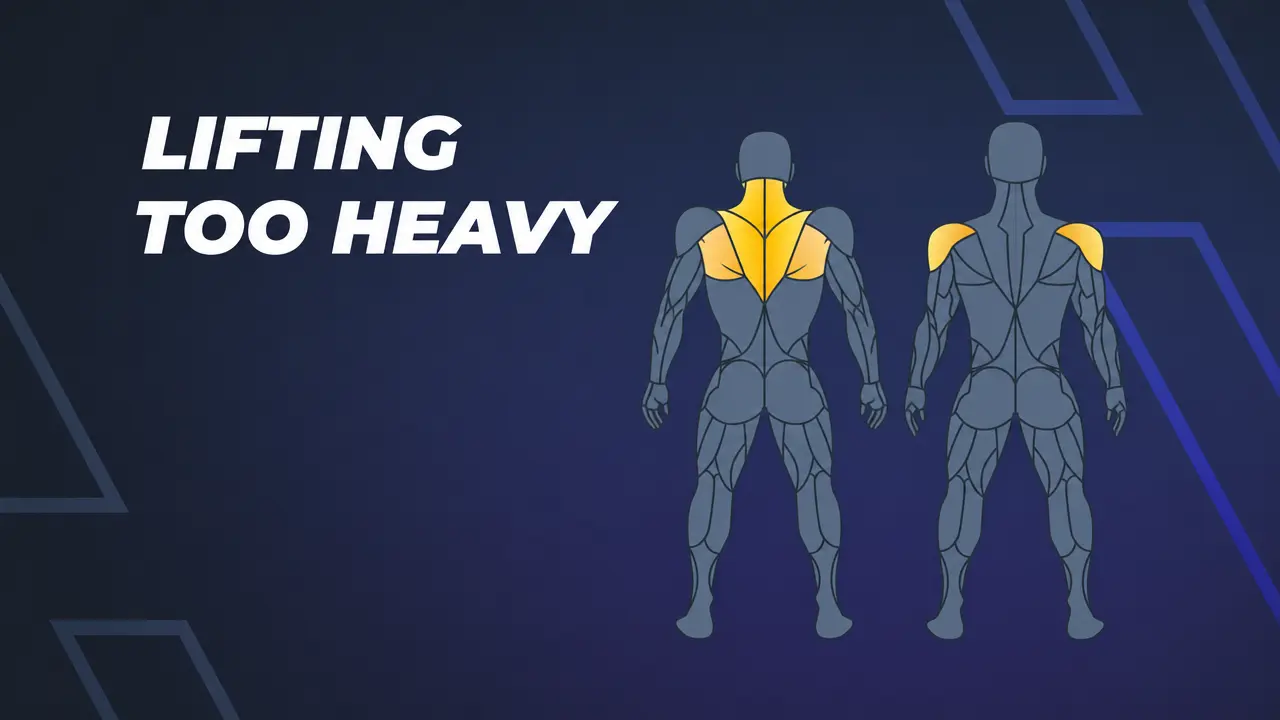
The rear deltoids are a small muscle group and get overpowered fast. When lifters use too much weight, they instinctively squeeze their shoulder blades together (scapular retraction) to move the load. That shifts the tension off the rear delts and onto the mid-back.
To fix this, use lighter weight with strict form. Start with a load you can lift for 15-20 clean reps without swinging. If your form breaks before rep 12, the weight is too heavy.
You Are Bending Your Elbows Mid-Rep
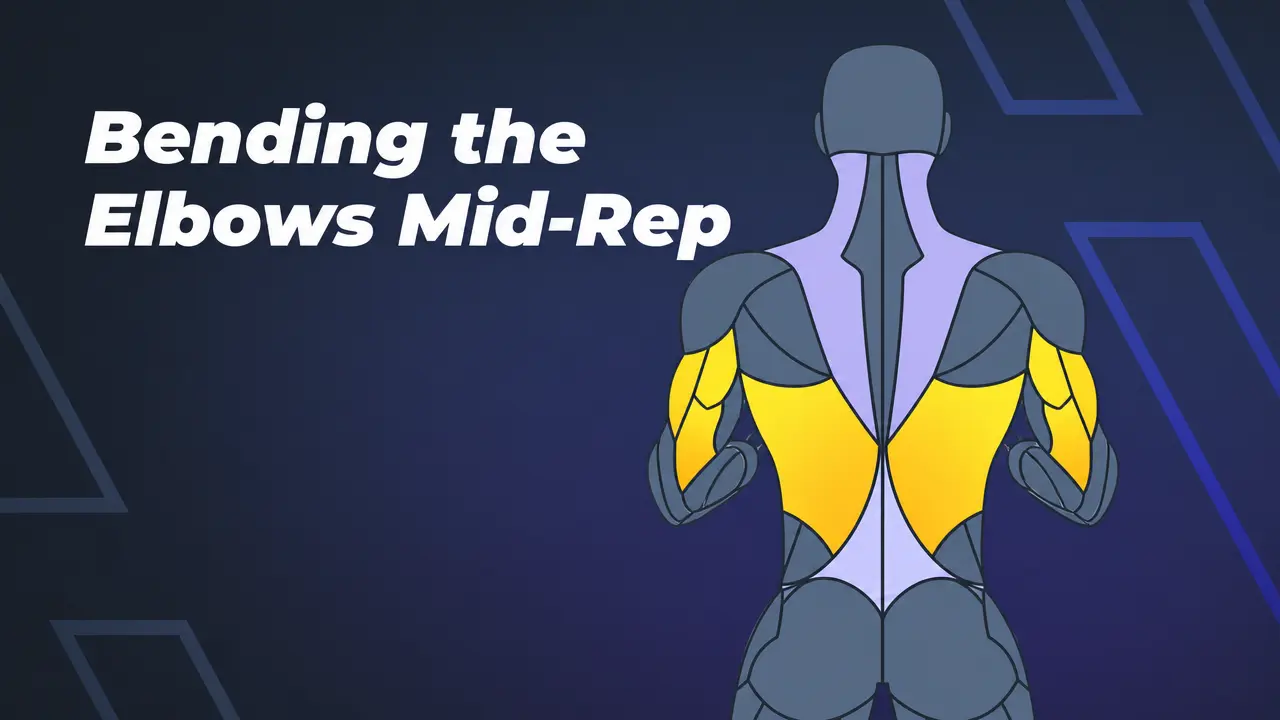
Bending the elbow mid-rep turns the rear delt fly into a rowing motion. Once the elbow flexes, your biceps and back muscles take over the pulling action.
To fix this, lock a slight bend in your elbow at the start of the rep and hold it the entire set. Your arm should move from the shoulder as one unit, not fold at the elbow. Any elbow movement is a sign the weight is too heavy or your focus slipped.
You Are Pulling Too Far Back
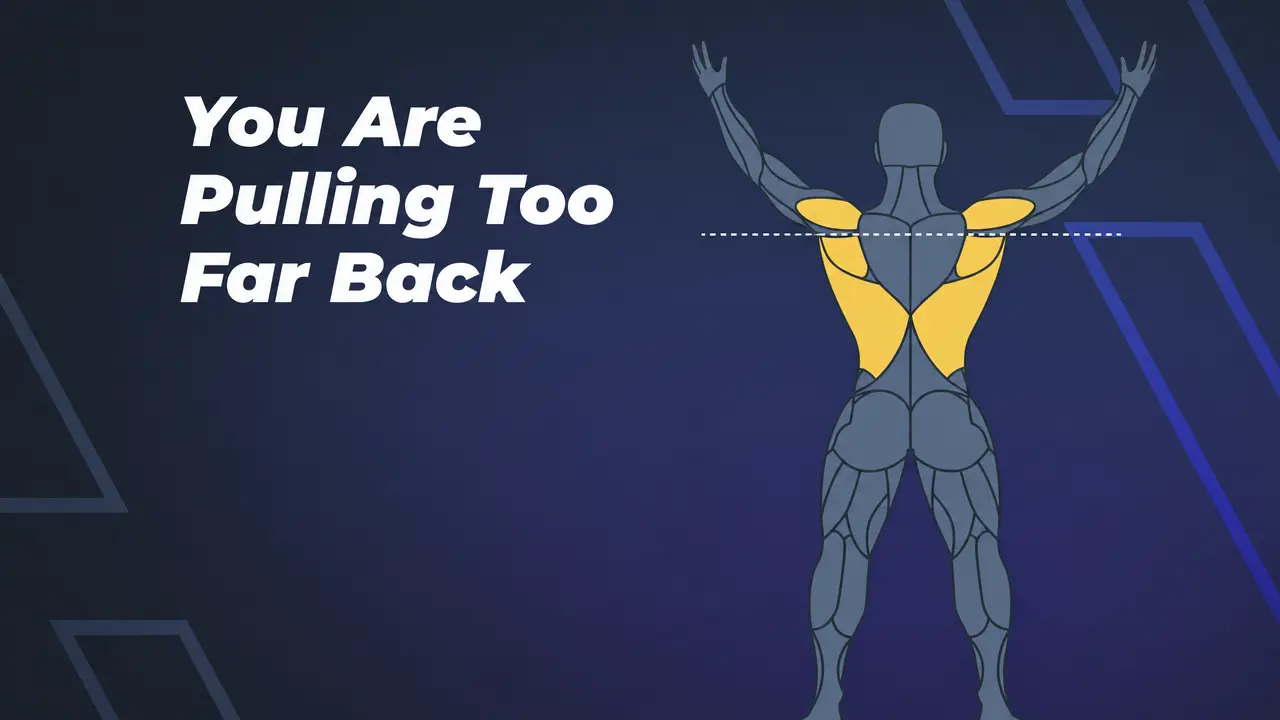
If you bring your hands past the plane of your torso, you engage the lats and upper back rather than keeping the focus on the rear shoulder. The rear delt’s job ends once your arm reaches the line of your shoulder. Anything past that point wastes range.
To fix this, stop the lift when your arms are level with your shoulders or just slightly behind. Hold the top position for a beat, feel the rear delt squeeze, then lower under control. Range of motion matters more than how far you can drag the weight back.
How To Properly Do A Rear Delt Fly

Doing a proper rear delt fly depends on the variation you’re doing. Let’s use a rear delt machine as an example:
- Sit with your chest pressed firmly against the pad.
- Set the handles to shoulder height.
- Assume the starting position with your elbows locked and your arms facing forward while holding the handles.
- Bring your arms to your sides, following the path the machine dictates.
- Bring your elbows behind the line of your body.
- Hold the end position for a moment before returning to the starting position in a slow and controlled manner.
- Avoid using momentum.
 Another example includes the dumbbell bent over reverse fly. To do it properly:
- Assume a bent over position with your torso parallel to the floor.
- At the starting position, have your arms hang below your chest with your elbows almost straight.
- Raise your elbows to the side in a controlled manner, at least until your arms are parallel to the floor.
- Lower your arms slowly, in a controlled manner.
Both variations have full video walkthroughs inside our app’s exercise library. Watch it if you want to see the form in action before your next session.
5 Best Rear Delt Fly Alternatives
There are very effective alternatives if the rear delt fly is not working for you. Some hit the side delts harder, some give you a bigger stretch, and some let you push past failure without wrecking your form. Here are the ones we like the most:
1) Dumbbell Incline Lateral Raise
The dumbbell incline lateral raise is an exercise you can do seated or standing up. The main difference between the two is that the seated version reduces the amount of fatigue you’ll experience. That said, both are fantastic exercises for exercising your shoulders.
For this example we’ll share the seated lateral raise performed on a bench set between 45° and 90°. The higher the incline, the more you’ll target your side delts. And the lower the incline, the more you’ll focus on your front delts.
Note: Sitting down shuts off your core, glutes, and quads, which drops systemic fatigue and lets you push the side delts harder without draining the rest of your training week. The bench also locks you into a strict path, so you can’t swing the weight to cheat the reps.

To do it right:
- Sit back on the bench and let the dumbbells hang at your sides.
- Raise the weights out with your pinkies pointing slightly up and thumbs slightly down, then pause a split second above parallel to squeeze the side delts.
- Lower the dumbbells under full control, keeping tension on the muscle the whole way down.
Note: If you can’t lift the weight properly, reduce it and focus on feeling the burn in the side delt.
2) Machine Lateral Raise
Machine lateral raises use a weight stack to load your side delts through a smooth, guided path. Well-designed machines let you sit vertical, align your shoulders with the axis, and keep tension across the full range of motion. The selectorized stack also makes warming up and running drop sets fast, which is why we recommend it for high-volume shoulder training.
To do it right:
- Sit tall with your back flat against the pad and your body close to vertical.
- Push the handles up and out until your arms pass just above parallel to the floor, then lower them with your side delts actively fighting the weight.
- Don’t lean back or swing your hips to move heavier loads.
Note: Rep ranges here work from as low as 8 up to 30, based on how your shoulder joint feels. Keep control on the way up and the way down for maximum tension.
3) Cross Body Lateral

The cross body lateral is a single-arm cable exercise that trains the side delt in a deeply stretched position. Research published in the Journal of Strength and Conditioning Research shows training at longer muscle lengths drives more hypertrophy than working through short ranges. This move loads that stretched position better than free weights or machines can.
To do it right:
- Set the cable pin between hip height and just above shoulder height.
- Grab the handle with your far hand, walk out to build tension, and turn your body away from the stack so the cable pulls across your chest.
- Raise your arm out to the side with your pinky angled slightly up, then lower it under control.
Note: Use light weight and stay in the 15 to 25 rep range for your first set. If you go too heavy, your triceps and back will take over, killing the mind-muscle connection with the side delt.
4) Freemotion Lateral Raise
The freemotion lateral raise is a two-arm cable lateral raise performed with the cables set at hip height. This setup loads the side delt hardest at the bottom stretch and lightens as you lift, which matches the force curve science says produces the most growth. It also removes the stability demands of dumbbells, so you can focus purely on the target muscle.
To do it right:
- Set both pins at hip height and get either your wrists cuffed in or your straps locked in.
- Step forward to build tension, face away from the machine, and raise your arms out to your sides with your pinkies angled up.
- Come down slowly, letting your arms drift behind your body for a bigger stretch before driving back up.
Note: Be strict on your form from start to finish. Cable resistance makes hipping into the motion tempting when you fatigue, and that spills the tension off your side delts.
5) Barbell Front Raise → Barbell Upright Row

Going from the barbell front raise to the upright row is a mechanical drop set that hits the side and front delts back to back. Front raises are mechanically harder because the lever arm is longer, so once you fail, switching to upright rows gives you another 5 to 10 reps at the same load. It’s one of the most efficient ways to push shoulder training past failure, and it fits perfectly into a push day workout.
To do it right:
- Grab a barbell with a slightly wider than shoulder-width grip and raise it in front of your body to at least 45°.
- Lower the bar under active control through the middle range, where the tension on the side delts peaks.
- Once you can’t get another front raise, bring your hands closer together and pull the bar up toward your forehead in an upright row.
Note: Use grip straps or Versa grips for this workout. Your grip will fail long before your shoulders so they are key to doing it right. An empty 45-pound bar is plenty for high-rep sets of 10 to 20.
What if the reason your shoulders still look flat isn’t the exercise itself, but the plan built around it?
Gymverse builds a personalized shoulder workout plan around your equipment, your schedule, and your training level, with 1,000+ exercises and step-by-step video guides on every single one so you nail the form on the first rep.
Start your free 7-day trial and train with plans built by professional coaches who know exactly where the rear delts hide, and how to bring them out.
Conclusion
The rear delt fly is one of the most botched exercises in shoulder training, and the reason is always the same:
- The traps and rhomboids take over
- The weight is too heavy
- The elbow bends
- The pull goes too far back
Fix those four errors and the rear delts finally get the tension they need to grow.
If the movement still doesn’t click, the five alternatives we shared above give you every angle you need. Pick two or three and rotate them through your training week.
The rear delts respond to strict form, controlled tempo, and steady volume across weeks and months. Train them like you mean it and track your progress.
Frequently asked questions
Why can't I feel my rear delts?
Your traps and rhomboids are taking over the movement, usually because the weight is too heavy or you're retracting your shoulder blades at the top. Drop the load, keep your shoulder blades relaxed, and move only from the shoulder joint. If you still can’t feel the muscle work, switch to a cable variation for constant tension across the full range.
What are the best rear delt fly alternatives?
The five that work best are the dumbbell incline lateral raise, machine lateral raise, cross body lateral, freemotion lateral, and the front raise into an upright row combo. Each one loads the rear and side delts at a different angle and rep range. Rotate two or three across your training week for the full stimulus.
How many reps should I do for rear delt flies?
Stay in the 12 to 20 rep range with strict form. The rear delt is small and responds best to lighter loads with high volume instead of heavy weight. If you can’t hit 12 clean reps, the weight is too heavy.
How often should I train rear delts?
Two to three times per week works for most lifters. The rear delt recovers quickly because it's small, so you can hit it on push days, pull days, or dedicated shoulder days without overtraining.
Sources & further reading
All Gymverse articles are reviewed against current research. See our full References & Research page.
Turn what you just learned into a training plan that works for you. Personalized structure. AI coaching. Real progress.
START TRAINING →