Best Dumbbell Exercises for Every Muscle Group (The Complete List)
 By Amnon V. ·
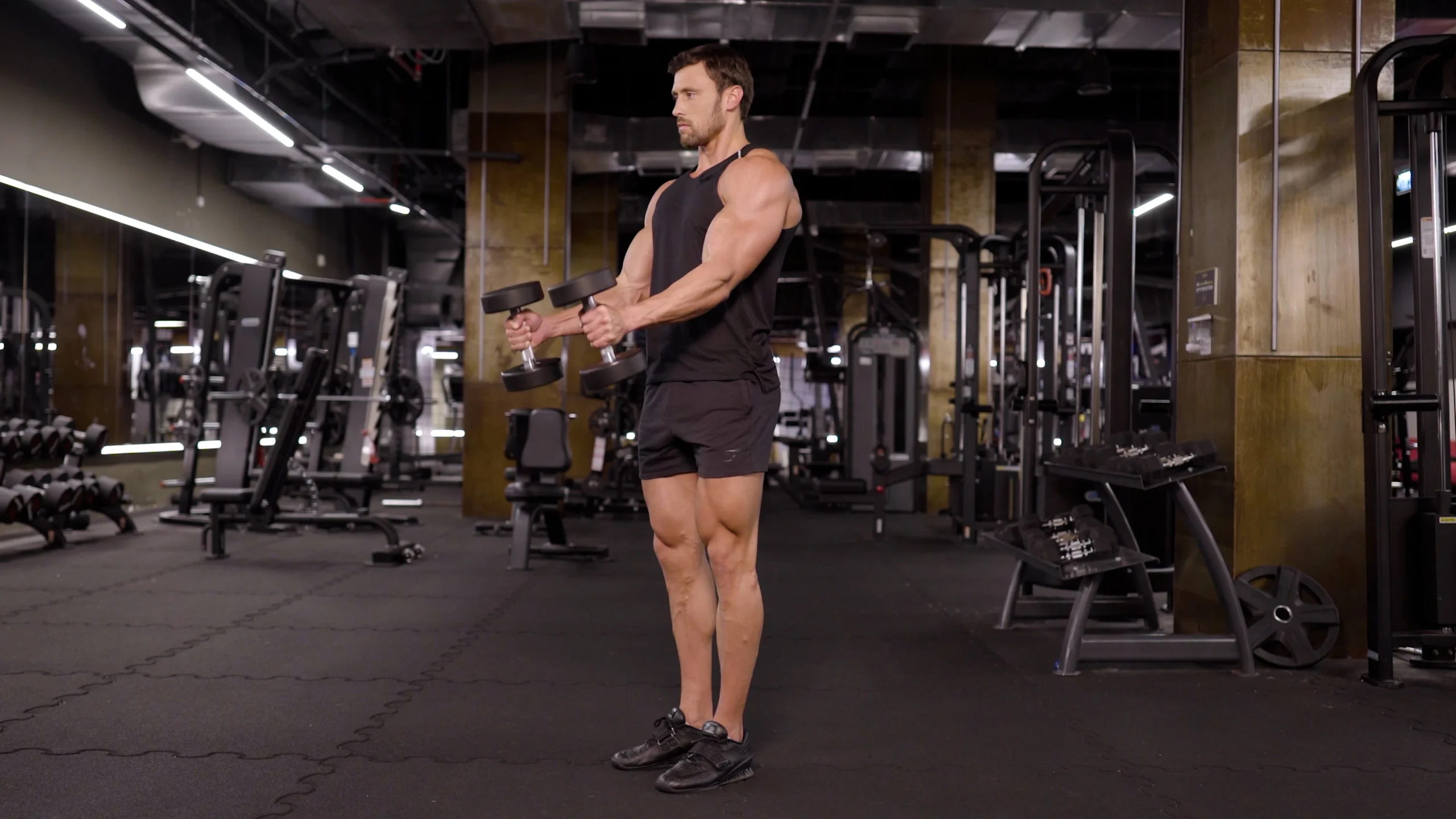
Most lifters treat dumbbells as a backup when the squat rack is taken or when they can’t get to a gym at all. However, the unfortunate truth is that that thinking costs them progress. A pair of dumbbells trains every major muscle group through a longer range of motion than a barbell, and forces each side of your body to carry its own weight.
That’s why today we’ll cover the three best dumbbell exercises for chest, back, shoulders, arms, and legs. You’ll get sets and reps for each one, form cues that keep the tension where it belongs, and two ready-to-run splits you can start this week.
Why Dumbbells Build Muscle Just As Well As Barbells
Research shows that load matters less than effort. A 2017 meta-analysis in the Journal of Strength and Conditioning Research found that lifters training with lighter loads to failure built the same amount of muscle as lifters training with heavy loads to failure. What drives growth is how close you push each set to your absolute limit, not the weight itself.
That said, dumbbells hold two specific advantages over a barbell.
Each arm and leg works on its own, so your stronger side can’t cover for your weaker one.
Your wrists, elbows, and shoulders follow a path your joints choose rather than a path dictated by a fixed bar. Meaning you get a comparable growth stimulus with less strain on the joints.
Quick Reference: The Best Dumbbell Exercise For Every Muscle Group
| Muscle Group | Top 3 Exercises | Sets x Reps |
|---|---|---|
| Chest | Dumbbell floor press, dumbbell bench press, incline dumbbell press | 3–4 x 8–15 |
| Back | Single-arm dumbbell row, chest-supported dumbbell row, dumbbell pullover | 3–4 x 8–15 |
| Shoulders | Seated dumbbell press, standing dumbbell lateral raise, bent over reverse fly | 3–4 x 8–20 |
| Arms | Incline dumbbell curl, standing dumbbell hammer curl, overhead triceps extension | 3 x 8–15 |
| Legs | Dumbbell goblet squat, dumbbell romanian deadlift, dumbbell bulgarian lunge | 3–4 x 8–15 |
Best Dumbbell Chest Exercises
Your chest responds to pressing, and dumbbells let you press deeper than a barbell allows. These are the three we recommend.
1) Dumbbell Floor Press

The dumbbell floor press is a horizontal press done lying on the ground instead of a bench. The floor stops your upper arms at roughly parallel, which cuts the bottom of the range and shifts work toward your triceps and the mid-range of your chest press. That makes it a strong option for lifters whose shoulders hurt on a flat bench, and for anyone training at home without a bench.
That said, if you have no shoulder issues and you have a bench, go with the dumbbell bench press. It provides much better hypertrophy (muscle growth) since you stretch your chest muscles a lot more.
To do it properly:
- Lie on the floor with dumbbells at chest level, palms facing forward.
- Press the dumbbells straight up until your arms are fully extended.
- Lower with control until your upper arms touch the floor, then repeat.
Sets and reps: 3–4 sets of 8–12 reps.
2) Dumbbell Bench Press
How To Do Dumbbell Bench Press – Chest Workout Guide
The dumbbell bench press is the dumbbell version of the classic flat press. Because each arm moves on its own, the dumbbells travel through a deeper stretch at the bottom than a barbell allows, which is part of why it is such a reliable chest builder.
To do it properly:
- Lie with your head, shoulders, and glutes in contact with the bench and feet flat on the floor.
- Squeeze your shoulder blades together.
- Lower the dumbbells with control until contact is made with the side of your chest, then extend your elbows until they are locked.
Sets and reps: 3 sets of 10–15 reps.
3) Incline Dumbbell Press
How To Do Incline Dumbbell Press for Upper Chest Gains
The incline dumbbell press is a pressing movement done on a bench set between 30° and 45°. That angle mainly works your upper chest, and as a secondarily, your shoulders and triceps. Going steeper than 45° turns it into a shoulder exercise, due to your front delts taking over as the bench climbs toward vertical.
To do it properly:
- Set the bench at a 30-45 degree angle.
- Lie with your head, shoulders, and glutes in contact with the bench and feet flat on the floor.
- Squeeze your shoulder blades together.
- Lower the dumbbells with control until contact is made with the sides of your upper chest, then extend your elbows until they are locked.
Sets and reps: 3–4 sets of 8–12 reps.
Best Dumbbell Back Exercises
Your back needs both vertical and horizontal pulling to grow evenly, and dumbbells cover both.
1) Single-Arm Dumbbell Row

The single-arm dumbbell row is a horizontal pull where one hand supports your body on a bench while the other pulls the weight from the floor to your hip.
One of the benefits this exercise provides is that training one side at a time exposes strength differences a barbell row can hide. A downside is that it takes longer to do since you work one arm at a time. Still, it’s a fantastic way to work on your lats and secondarily on your biceps and obliques.
To do it properly:
- Lean on the bench with your knee and arm, keeping your torso parallel to the ground.
- Arch your back.
- Pull the dumbbell towards your hip by lifting your elbow as high as you can.
- Row with the dumbbell close to your side with the intention of bringing it to your pocket.
- Descend with control.
Note: The most common mistake lifters make is rotating the torso to yank the weight up. Keep your shoulders square to the floor for the entire set.
Sets and reps: 3–4 sets of 8–12 reps per side.
2) Chest-Supported Dumbbell Row
How To Do Chest Supported Dumbbell Row – Back Builder

The chest-supported dumbbell row is a two-arm row done face-down on an incline bench. The bench removes momentum from the movement, so you can’t heave the weight up with your hips or lower back. Your lats have to do the main work and secondarily, your biceps and traps & neck.
To do it properly:
- Put the bench in a slight incline and hold the dumbbells in a neutral grip position.
- Row with the dumbbells close to each side as if you are bringing them to your pocket.
- Bring them up as high as you can.
- Descend with control.
Sets and reps: 3 sets of 10–12 reps.
3) Dumbbell Pullover
The dumbbell pullover is a movement where you lower a single dumbbell behind your head from a lying position, then pull it back over your chest. It trains the chest and lats together through a big stretch over the head. EMG work shows the chest doing most of the work, with the lats and the long head of the triceps assisting. To bias the lats, keep your arms slightly straighter and think about pulling from your elbows rather than your hands.
To do it properly:
- Begin with elbows almost straight gripping the dumbbell over your face.
- Slowly lower your arms backwards until you feel a stretch in your chest and lats.
- Hold the end position for a moment before returning to the starting position in a controlled manner.
Sets and reps: 3 sets of 10–15 reps.
Best Dumbbell Shoulder Exercises
Your shoulder has three heads and pressing alone only trains one of them well. Direct work for the sides and rear is what builds the round, capped look.
1) Seated Dumbbell Shoulder Press
How To Do Seated Dumbbell Shoulder Press – Full Guide
The seated dumbbell shoulder press is a vertical press done on an upright bench. The seat locks your torso in place, so your shoulders do the pressing without help from your legs. This exercise mainly works your shoulder muscles and secondarily, your triceps and traps & neck.
To do it properly:
- Sit upright, with your back pressed against the pad.
- Hold up the dumbbells at the sides of your shoulders.
- Keep your elbows right below the dumbbells, with your forearms perpendicular to the ground.
- Press the dumbbells upwards, keeping them in line with your body.
- Avoid leaning back or arching your spine.
- Finish with your elbows locked and your arms in line with your ears.
- Descend in a controlled manner to the starting position.
Sets and reps: 3–4 sets of 8–12 reps.
2) Standing Dumbbell Lateral Raise
How To Do Dumbbell Lateral Raises for Wider Shoulders
The standing dumbbell lateral raise is a single-joint movement where you lift both dumbbells out to your sides until your arms reach shoulder height. It isolates the side of your shoulder better than any pressing variation. As a result, it mainly works your shoulders and secondarily, your traps and neck.
To do it properly:
- Slightly rotate your arms, having your thumb point down and your pinky finger leading the movement.
- Raise your arms at a 30-degree angle from your torso and at least until they are parallel to the floor.
- Return to the starting position.
- Avoid using momentum.
Note: Most lifters go too heavy and turn it into a shrug. Pick a weight you can lift without your traps taking over.
Sets and reps: 3 sets of 12–20 reps.
3) Dumbbell Bent Over Reverse Fly

The dumbbell bent over reverse fly is an exercise that hits the rear delts (the head of the shoulder most lifters ignore and the one that gives your shoulders depth from the side view). This exercise primarily works your shoulders and secondarily your traps and neck. Check our rear delt fly article for the full breakdown.
To do it properly:
- Assume a bent-over position with your torso parallel to the floor.
- At the starting position, have your arms hang below your chest with your elbows almost straight.
- Raise your elbows to the side in a controlled manner, at least until your arms are parallel to the floor.
- Lower your arms in a controlled manner.
Sets and reps: 3 sets of 12–20 reps.
Best Dumbbell Arm Exercises
Arms grow from direct work, and dumbbells give you angles a barbell can’t.
1) Incline Dumbbell Curl

The incline dumbbell curl is a biceps curl that you do while lying back on a bench set to about 60°. That position pulls your arms behind your body, which stretches the long head of your biceps under load. As a result, it also works on your forearms.
To do it properly:
- Set the bench at a 60-degree angle.
- Sit with your back pressed against the pads.
- At the starting position, hold the dumbbells below your shoulders with your arms straight using an underhand grip.
- Perform the curl by bending your elbows and raising the dumbbells until they touch your chest.
- Return to the starting position in a slow and controlled manner.
- Avoid using momentum.
Sets and reps: 3 sets of 8–12 reps.
2) Standing Dumbbell Hammer Curl

The hammer curl is a biceps curl you do with your palms facing each other for the entire rep. That neutral grip trains the brachialis, a muscle underneath the biceps that pushes your biceps up as it grows, along with the forearm muscles most lifters skip.
To do it properly:
- Stand upright.
- At the starting position, hold the weight at a dead hang with your arms straight, using a neutral grip.
- In a controlled manner, perform the curl by bending your elbows until the dumbbells are in front of your neck.
- Control the descent and avoid using momentum.
Sets and reps: 3 sets of 10–12 reps.
3) Overhead Dumbbell Triceps Extension

The overhead dumbbell triceps extension is a single-arm or two-hand movement where you lower a dumbbell behind your head and press it back up. The overhead position puts the long head of your triceps in a deep stretch, which drives growth in the largest of the three triceps heads.
To do it properly:
- Sit or stand and hold the dumbbell in both hands with your arms overhead, in line with your ears.
- Bend your elbows, lowering the weight until the dumbbell is behind your head.
- Extend your elbows, bringing your arms back to an overhead position with your arms straight.
- Avoid arching your back.
Sets and reps: 3 sets of 10–15 reps.
Best Dumbbell Leg Exercises
Unfortunately, a lot of lifters think that dumbbells aren’t good enough for training legs. However, that’s not the case. You can do single-leg work. This cuts the load your dumbbells need to carry in half without cutting the stimulus.
1) Goblet Squat
How To Do Goblet Squats – Best Squat for Beginners
The goblet squat is a squat performed with one dumbbell held vertically at chest height. Holding the weight in front shifts your center of gravity forward, which helps you stay upright and keeps your knees tracking over your toes.
To do it properly:
- Hold the dumbbell close to your chest in a goblet position.
- Take a comfortable stance with your feet about shoulder-width apart and your toes pointed out.
- Push your chest up by pinching your shoulder blades together and arching your lower back.
- Slowly bend your knees as much as you can while maintaining an upright torso, an extended back, and keeping your feet flat on the ground.
- Go as low as you can, then stand back up until your knees are fully extended.
Sets and reps: 3 sets of 10–15 reps.
2) Dumbbell Romanian Deadlift
How To Do Dumbbell Romanian Deadlift – Perfect Form
The dumbbell Romanian deadlift is a hip hinge where you lower the weights along the front of your legs while keeping your knees soft. It trains your hamstrings and glutes through a long stretch.
To do it properly:
- Stand with a dumbbell in each hand, palms facing your thighs.
- Keep a slight bend in your knees.
- Push your hips back and lower the dumbbells along the front of your legs.
- Stop when you feel a strong stretch in your hamstrings.
- Drive your hips forward to stand back up.
Note: Push your hips back like you’re closing a car door with your rear end. That hinge cue keeps the tension on your hamstrings instead of your lower back.
Sets and reps: 3–4 sets of 8–12 reps.
3) Dumbbell Bulgarian Lunge

The Dumbbell Bulgarian Lunge is a single-leg squat with your back foot elevated on a bench behind you. One leg carries the load, so a moderate pair of dumbbells creates plenty of stimulus without wrecking your grip.
To do it properly:
- Hold the dumbbells at your sides.
- Place half of your back foot on a bench or a stable knee-level platform.
- Lower your hips until your back knee gently reaches the ground while keeping the front knee at a 90° angle.
- Maintain an upright torso and keep your front foot flat on the ground throughout the entire exercise.
Sets and reps: 3 sets of 8–12 reps per leg.
How To Turn These Exercises Into A Weekly Plan
The simple truth is that a list of exercises is not a program. Here are two ready-to-run splits using the exercises above.
Option 1: Two full-body days per week
Pick one chest, one back, one leg, one shoulder, and one arm exercise per session. Alternate the arm exercise between biceps and triceps across the two days. Run the leg exercise first when you’re fresh, then chest, back, shoulders, and arms in that order.
Option 2: Four days, upper and lower split
On upper days, run one chest exercise, one back exercise, one shoulder exercise, one biceps exercise, and one triceps exercise. On lower days, run all three leg exercises, and if your hamstrings need more, add a second hamstring movement such as extra Romanian deadlifts or a dumbbell leg curl to finish. Alternate upper and lower days across the week.
Both work, and the right one depends on how many days you can commit to. If you want a full plan built around the equipment you own, check the home workouts library in our app (iOS and Android).
Are you ready to stop guessing which exercises belong in your plan?
Gymverse builds your dumbbell program around the exact weights you own, adjusts your loads week after week as you get stronger, and gives you a video guide for every one of the 1,000+ exercises in the app so you never have to wonder whether your form is right.
Your plan runs from 1 to 7 days per week, with workouts as short as 10 minutes, and it adapts around your schedule instead of asking you to bend around it.
Start your free 7-day trial and get a dumbbell plan built for you today. App available on both iOS and Android.
Conclusion
A pair of dumbbells trains every muscle group your body has, through a range of motion that a barbell sometimes can’t match.
All fifteen exercises in this list cover chest, back, shoulders, arms, and legs with the top options for each. Run them through one of the two splits above, push each set close to failure, and add weight or reps every time you train.
The dumbbells in your hand right now are enough. What decides whether you build muscle with them or not isn’t the equipment itself. It’s how many weeks in a row you show up.
Frequently asked questions
Can you build muscle with only dumbbells?
Yes, research on training to failure shows that muscle growth depends on effort, not the equipment itself.
What weight dumbbells should I start with?
Pick a weight that lets you finish the top of the rep range with two reps left in the tank. For most beginners, that's 10 to 15 lbs for shoulder and arm work, and 20 to 30 lbs for pressing and rowing. Legs need more, so a pair of 30 to 40 lbs dumbbells covers goblet squats and Romanian deadlifts for the first few months.
Is the dumbbell floor press better than the bench press?
To be honest, it depends on your current health. The floor press cuts the bottom of the range, which reduces shoulder strain and lets lifters with shoulder pain keep pressing. The bench press trains the chest through a longer range and drives more chest growth for lifters who can perform it without pain.
How many days a week should I train with dumbbells?
Two to four days works for almost every goal. Two full-body sessions per week build muscle for beginners and busy lifters. Four days split across upper and lower body suits intermediate lifters who want more volume per muscle group.
Sources & further reading
All Gymverse articles are reviewed against current research. See our full References & Research page.
Turn what you just learned into a training plan that works for you. Personalized structure. AI coaching. Real progress.
START TRAINING →